Many people may have heard about Vivitrol regarding their loved one who is suffering from opioid or alcohol abuse.
The first often asked question about the medication is simply if Vivitrol is classified as a controlled substance.
Although this seems simple, this single question determines how Vivitrol will be prescribed, what types of people will have access to it, and what the risk of abuse with it might be.
Let us take you through all the things to know regarding this medication.
What Exactly Is Vivitrol?
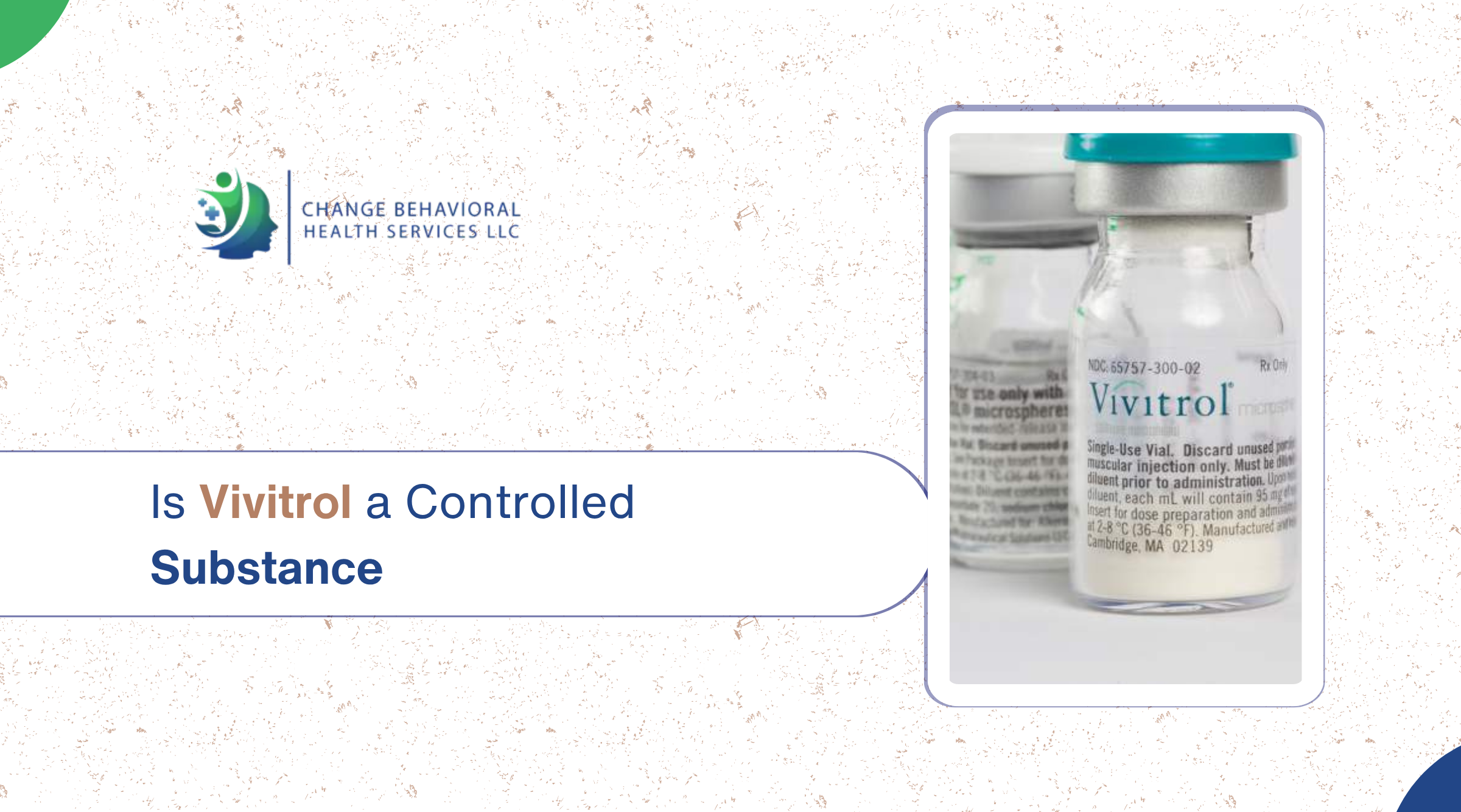
Vivitrol is the brand name for extended-release naltrexone, a medication given as a once-monthly injection.
It is approved by the U.S. Food and Drug Administration to help treat two conditions:
- Opioid use disorder
- Alcohol use disorder
Unlike some addiction medications, Vivitrol does not contain any opioids.
It belongs to a class of drugs called opioid antagonists -these work by blocking the effects of opioids in the brain rather than mimicking them.
That distinction is central to understanding its legal classification.
Who Manufactures It and How Is It Given?
Vivitrol, made by Alkermes, Inc., is given as an injection into the muscle, usually in a doctor’s office, and every four weeks.
Since it’s a long-acting injection instead of having to take a daily oral medication or dissolve it on your tongue, many people undergoing treatment find this method of taking medication easier during their recovery from addiction.
Vivitrol is a 380 mg injectable medication given in the muscle of your buttocks or thigh. Each dose lasts around 30 days.
Vivitrol cannot be administered at home and self-administered because of this period between doses; it has to be administered by a medical professional with a valid license to do so (e.g., a physician, a nurse, a pharmacologist, etc.).
Is Vivitrol a Controlled Substance?
The answer to your question is that Vivitrol (naltrexone) is not a controlled substance – there is no evidence of its abuse potential or of the development of physical dependence.
And this is precisely the reason why Vivitrol never made it to the list of controlled substances by the actual DEA.
Vivitrol is a medicine used to help with addiction, but has a unique property that sets it apart of other medicines.
Being unscheduled, there is no federally imposed restriction on prescribing this drug as there is on methadone and buprenorphine suggesting that no additional restrictions are imposed on physician qualification before prescribing Vivitrol.
Why Does the Scheduling Question Come Up So Often?
Medications that are used to treat Opioid addiction are usually confused with opioids.
As an individual hears that there is a drug that can be used to treat opioid addiction, they think that the drug must be an opioid.
Other commonly used drugs that are used in the treatment of Opioid addictions (controlled substances) used in the treatment of Opioid addictions include Methadone and Buprenorphine (they have an affinity to the Opioid receptors and can lead to dependence).
How Vivitrol functions is quite unlike these two drugs hence altering the classification of Vivitrol.
What It Means That Vivitrol Is an Antagonist
An opioid antagonist does not activate the opioid receptors in your brain. Instead, it occupies and blocks them. That means:
Vivitrol is not known to cause any high or euphoric effect by itself.
It can not induce bodily dependence.
No street value or known abuse potential.
When an individual on Vivitrol takes opioids, they will not experience much or any impact of the opioid.
Since naltrexone lacks all the characteristics that contribute to addiction or abuse, it has never been put on schedule under the Controlled Substances Act.
Who Can Prescribe Vivitrol?
Because Vivitrol is not a controlled substance, any licensed healthcare provider who is authorized to prescribe medications can prescribe it.
What to Expect When You’re Starting Vivitrol
Knowing what comes before, during and after the injection can help patients feel more prepared and less anxious about starting treatment.
Before the First Injection
There are a few important steps that have to happen before someone receives their first Vivitrol shot.
- A full medical and addiction history review
- A liver function check, since naltrexone can affect the liver at high doses
- A confirmed opioid-free period of at least 7 to 10 days (for opioid use disorder)
- A urine drug screen to confirm the absence of opioids before administration
- A thorough discussion of what the medication does and does not do
During Treatment
Once treatment begins, most patients receive one injection per month. Some common side effects include:
- Nausea – especially in the first few weeks
- Fatigue
- Decreased energy
- Headache
- Dizziness
- Injection site reactions such as tenderness, swelling or hardness
- Low appetite
Throughout your entire course of treatment (especially within the first few months) – it’s extremely important to maintain contact with your care team.
Important Safety Considerations
Vivitrol may not be an appropriate option for everyone, and must not be taken by those who are:
- Currently using opioids and not fully detoxed
- Exhibiting significant liver dysfunction or acute hepatitis
- Have any other existing medical conditions that require caution when using this medication
- Have a known history of allergic reaction to naltrexone or one of the components of this injection
Before you can use Vivitrol as part of your treatment plan, a qualified healthcare provider will assess each of these factors.
Is Vivitrol the Right Choice for Your Recovery?
Only a qualified provider will be able to provide the answer to that question to an individual.
There is no potential for abuse with this medication or the possibility of developing a new addiction to it.
Because it is taken only once a month, it makes it easier for some people to take the medication as prescribed compared to a daily-dose drug.
Patients do not need to make visits to a specific program for opioids.
The absence of control classification results in fewer restrictions impacting prescribers and those who will have access to the medication.
It has solid clinical evidence supporting its use in both opioid and alcohol use disorders.
The intent of this blog post is to serve a basic source of information only. It does not provide professional advice, diagnosis, or treatment for any condition.
Prior to beginning, stopping, or switching any medications or treatment plans, it is essential that all individuals speak to their doctor.
Take the Next Step
We at Change Behavioral Health Services provide care for adults in Maryland, Washington, D.C., and Virginia by creating individualized addiction recovery plans based on the individual.
If you have questions regarding Vivitrol or any other treatment issues, we will work with you to find the answers you need.