You started naltrexone and something shifted. Not in the way it was supposed to. You feel flatter than usual, a little removed from things, less like yourself.
And now you are wondering whether the medication is doing something to your mood.
It is something providers at Change Behavioral Health Services, LLC hear from time to time.
It is a fair question. And it deserves a straight answer.
What Naltrexone Is Actually Doing
Naltrexone works by blocking opioid receptors in the brain. That is the whole mechanism.
Block the receptor, and the reward signal that alcohol or opioids normally trigger does not fire. Cravings quiet down because the brain stops getting that hit.
But those receptors do not only respond to substances. Your brain has its own opioid system running constantly in the background.
It is involved in how you experience everyday pleasure, how connected you feel to other people, how you regulate your emotional state. Naltrexone does not know the difference. It blocks across the board.
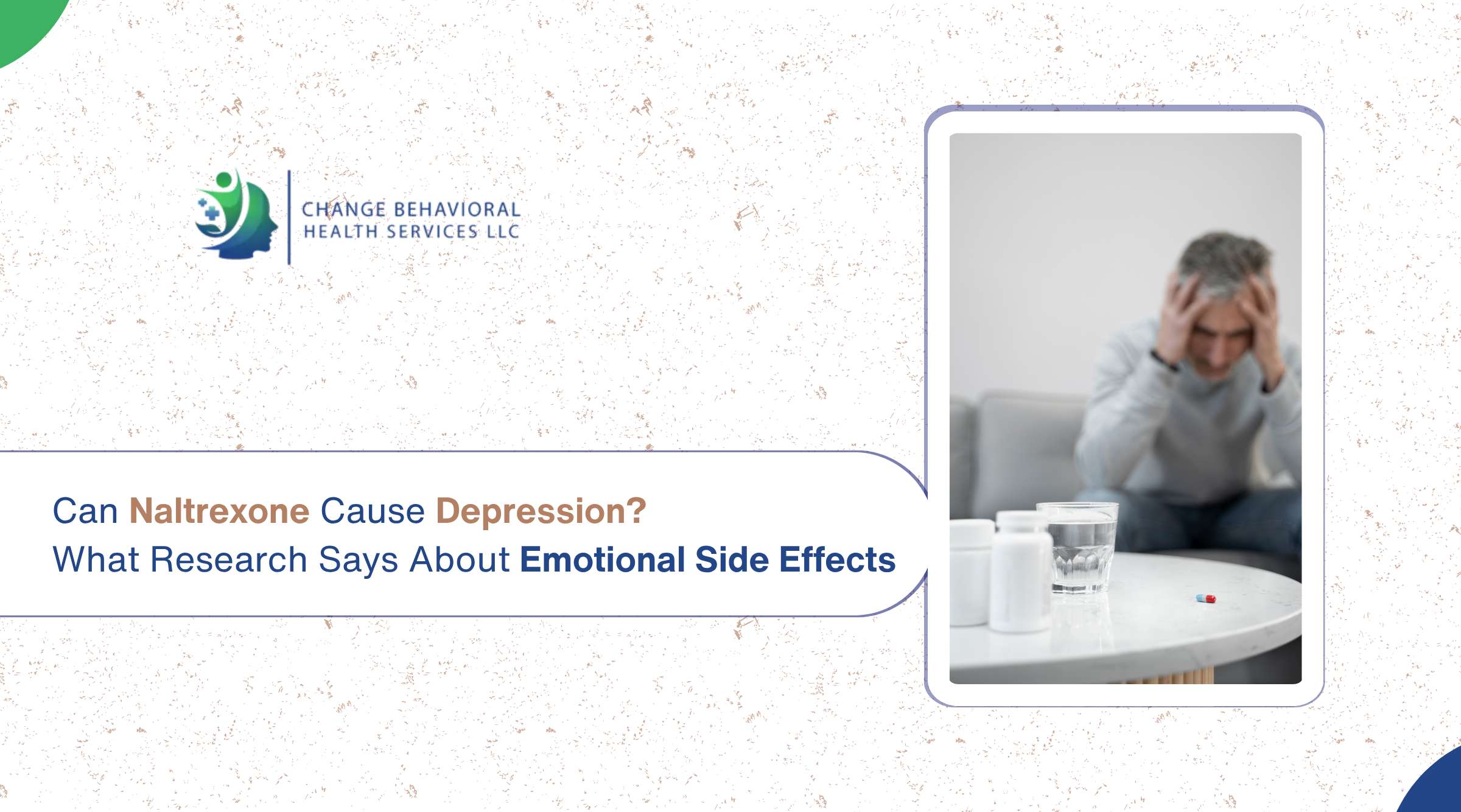
So, can Naltrexone cause depression? Let’s discuss.
Does Naltrexone Cause Depression? What Evidence Says
The FDA label for naltrexone lists depression as a reported side effect. A lot of people read that and assume the medication causes depression. But reported and caused are two very different things
The population starting naltrexone tends to already carry high rates of depression. Substance use disorders and mood disorders overlap significantly.
Early recovery is also genuinely hard on the brain regardless of what medication is involved. The reward system, depleted from chronic substance use, takes time to recalibrate.
Separating what the medication is from what is everything else happening at the same time is not clean or simple.
This was directly examined in a randomized controlled trial that was published in the Journal of Psychiatry and Neuroscience.
The researchers compared individuals on naltrexone with a methadone maintenance control group and discovered that individuals who use naltrexone did not exhibit increasing symptoms of depression.
The reality is that individuals who remained and stuck to naltrexone, in fact, tended to have fewer depressive symptoms in the long term, rather than more.
Another study conducted by JAMA Psychiatry showed that there was no significant difference in the scores of depression between the two groups using extended-release naltrexone and buprenorphine-naloxone.
In neither of those papers does it state that naltrexone is an antidepressant. Nevertheless, they do put some resistance to the fact that it is a sure basis of depression.
Neither of those papers say naltrexone is an antidepressant. But they do push back on the idea that it reliably causes depression.
The Emotional Blunting
Here is where it gets more nuanced. What some people experience on naltrexone is not exactly depression. It is something closer to a flattening. A muting of everyday pleasure.
Things that used to feel good feeling more neutral. A sense of emotional distance that is hard to name.
This is likely tied to the opioid receptor blockade and its downstream effect on dopamine and thebroader reward pathway.
Research published inSocial Cognitive and Affective Neuroscience found that naltrexone reduced feelings of social connection in healthy volunteers, both in a lab setting and in their daily lives.
Not depression exactly, but a real and measurable shift in how connected people felt.
A separatePubMed study found naltrexone also affected how people processed emotional expressions, slowing identification of sadness and fear and reducing arousal responses to emotional content.
For some people this is barely noticeable. For others it is significant enough that it affects how they feel day to day. Both experiences are real. The distinction matters because the response to each is different.
Who Tends to Notice It More
Not everyone on naltrexone experiences mood changes. But certain factors seem to raise the likelihood:
- A history of depression or anxiety before starting the medication
- Being in early recovery when the brain is still recalibrating on its own
- Significant life stressorshappening at the same time
- Using naltrexone without any therapy or emotional support running alongside it
That last point matters more than it might seem. Medication in recovery handles the neurological piece. But the emotional weight underneath, the shame, the grief, the rebuilding – all of that needs somewhere to go too.
Research on naltrexone outcomes has noted that patients on naltrexone should be monitored regularly for mood throughout treatment, precisely because individual responses vary and some people do experience worsening even when the group average does not.
What To Do If Something Feels Off
Do not stop the medication on your own. That conversation belongs with your provider, not a solo decision made in a hard moment.
Be specific about what you are noticing. When it started. Whether it feels like sadness, flatness, disconnection, or something else. That detail matters because it points toward different possible adjustments, whether that is a dosage change, a timing adjustment, or a broader look at the treatment plan.
Recovery is not meant to mean trading one kind of suffering for another. If the medication is creating new problems while solving others, that is information worth acting on.
The Bigger Picture
At Change Behavioral Health Services, medication management is not a single appointment with a prescription at the end. It is an ongoing process, adjusted as your needs shift with real attention to how you are doing emotionally, not just whether the craving piece is being addressed.
If you are in Maryland or the surrounding area and something about your current plan is not sitting right, that is worth a conversation.