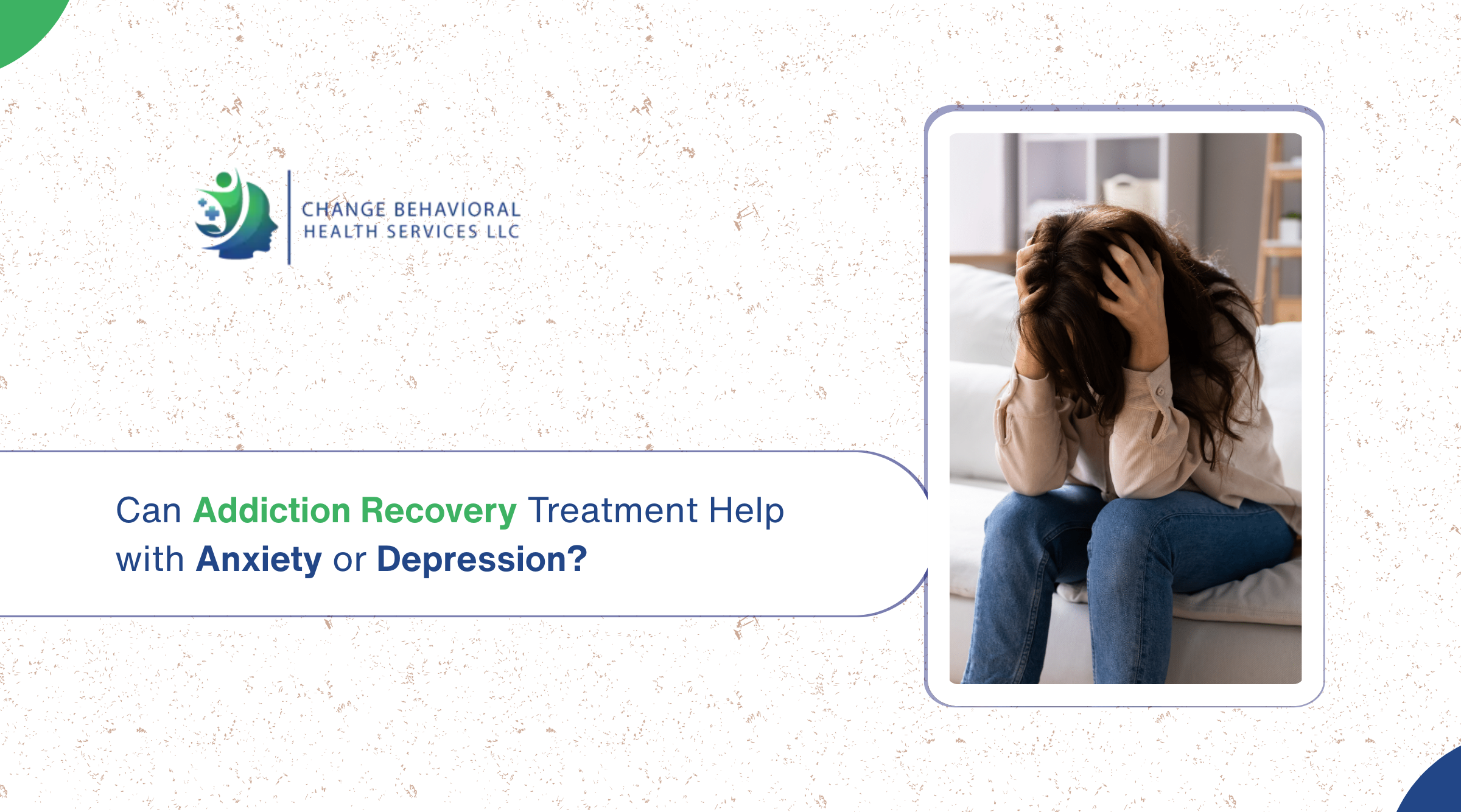
People struggling with substance use disorder often experience anxiety or depression. Living with constant worry, sadness, or emotional numbness can make daily life overwhelming. Mood swings and emotional distress can affect work, relationships, and overall well-being.
Many individuals turn to alcohol or drugs in an attempt to cope with these painful feelings. Unfortunately, substances do not truly relieve emotional distress. Over time, they often make anxiety and depression worse.
At Change Behavioral Health Services, LLC, we provide compassionate, individualized care for individuals struggling with addiction, anxiety, and depression. Our approach focuses on healing the whole person—body, mind, and spirit.
So, can addiction recovery treatment help with anxiety or depression?
The answer is yes.
What Is Addiction Recovery Treatment?
Addiction recovery treatment helps individuals stop using substances while learning healthier ways to manage stress, emotions, and life challenges.
Treatment often includes a combination of:
Behavioral therapy
Counseling and psychoeducation
Medical and psychiatric support
Relapse prevention strategies
Recovery treatment focuses on:
Understanding the root causes of substance use
Developing healthy coping strategies
Receiving medical support when needed
Building a healthier and more balanced lifestyle
Effective addiction treatment supports the whole person—physically, emotionally, and mentally.
Why Anxiety and Depression Often Occur with Addiction
Many individuals use substances to relieve emotional pain, trauma, stress, or overwhelming feelings. While substances may temporarily reduce emotional distress, they often worsen symptoms in the long term.
Substance use can negatively affect:
Sleep patterns
Relationships with family and friends
Work performance
Emotional regulation and stability
These disruptions often increase the risk of anxiety disorders and depression.
When substance use disorder and mental health conditions occur together, it is known as dual diagnosis or co-occurring disorders.
At Change Behavioral Health Services, we specialize in addressing both addiction and mental health together.
Can Addiction Recovery Treatment Help with Anxiety and Depression?
Yes. Integrated addiction and mental health treatment can significantly improve emotional well-being.
When both conditions are treated at the same time, individuals often experience reduced anxiety, improved mood, and better emotional stability.
Treatment can help individuals by:
Understanding the Root Causes
Therapy allows individuals to explore trauma, stress, or life experiences that contribute to both addiction and emotional distress.
Changing Negative Thought Patterns
Evidence-based therapies such as Cognitive Behavioral Therapy (CBT) help individuals recognize and change unhealthy thinking patterns associated with anxiety and depression.
Developing Healthy Coping Skills
Instead of relying on substances, individuals learn practical ways to manage:
Stress
Emotional triggers
Social pressure
Anxiety and overwhelming emotions
Improving Physical Health
Substance use often disrupts sleep, nutrition, and physical health. Poor physical health can worsen mental health symptoms.
Recovery programs may support:
Healthy sleep habits
Balanced nutrition
Regular physical activity
Stress-reduction techniques
A healthier body often leads to improved emotional well-being.
Medication Support When Appropriate
Some individuals may benefit from medications that help stabilize mood, reduce anxiety, or decrease substance cravings as part of a comprehensive treatment plan.
Addiction and Mental Health Services at Change Behavioral Health Services, LLC
At Change Behavioral Health Services, LLC, we provide integrated addiction and mental health treatment for individuals in Maryland, Washington DC, and Virginia.
Our services include:
Comprehensive psychiatric and behavioral health evaluations
Addiction counseling and psychoeducation
Medication-Assisted Treatment (MAT) for substance use disorders
Treatment for anxiety and depression
Relapse prevention planning
Personalized, person-centered care
Our goal is to provide compassionate, evidence-based care that empowers individuals to reclaim their lives.
Why Treating Addiction and Mental Health Together Matters
Untreated anxiety or depression can increase the risk of substance use as individuals attempt to cope with emotional pain.
Similarly, untreated substance use disorder can worsen mental health symptoms.
Treating both conditions together can:
Reduce relapse risk
Improve emotional stability
Strengthen long-term recovery
Improve quality of life
Integrated care helps individuals build sustainable, long-term recovery.
When to Seek Help
You or a loved one may benefit from professional support if you experience:
Persistent sadness or hopelessness
Ongoing anxiety or panic attacks
Using substances to cope with stress or emotions
Difficulty functioning at work or home
Repeated attempts to stop using substances without success
Seeking help is a courageous step toward healing and recovery.
Final Thoughts
Addiction recovery treatment can absolutely help with anxiety and depression, especially when both conditions are addressed together.
Through therapy, medical support, and healthy lifestyle changes, individuals can restore emotional balance and begin building a healthier future.
At Change Behavioral Health Services, LLC, we are committed to providing compassionate, comprehensive care for individuals navigating addiction and mental health challenges.
If you or someone you love is struggling, contact us today for a confidential assessment.
Recovery starts with the first step.
Frequently Asked Questions
What if I tried treatment before and it didn’t work?
Recovery is a personal journey. Sometimes treatment plans need adjustment to better meet an individual’s needs. Trying a different therapy approach, program, or provider can make a meaningful difference.
Does addiction recovery treatment cost a lot?
Costs vary depending on the program and level of care. Many treatment programs accept insurance and offer flexible payment options. Asking about financial assistance and available resources can help make treatment more accessible.