
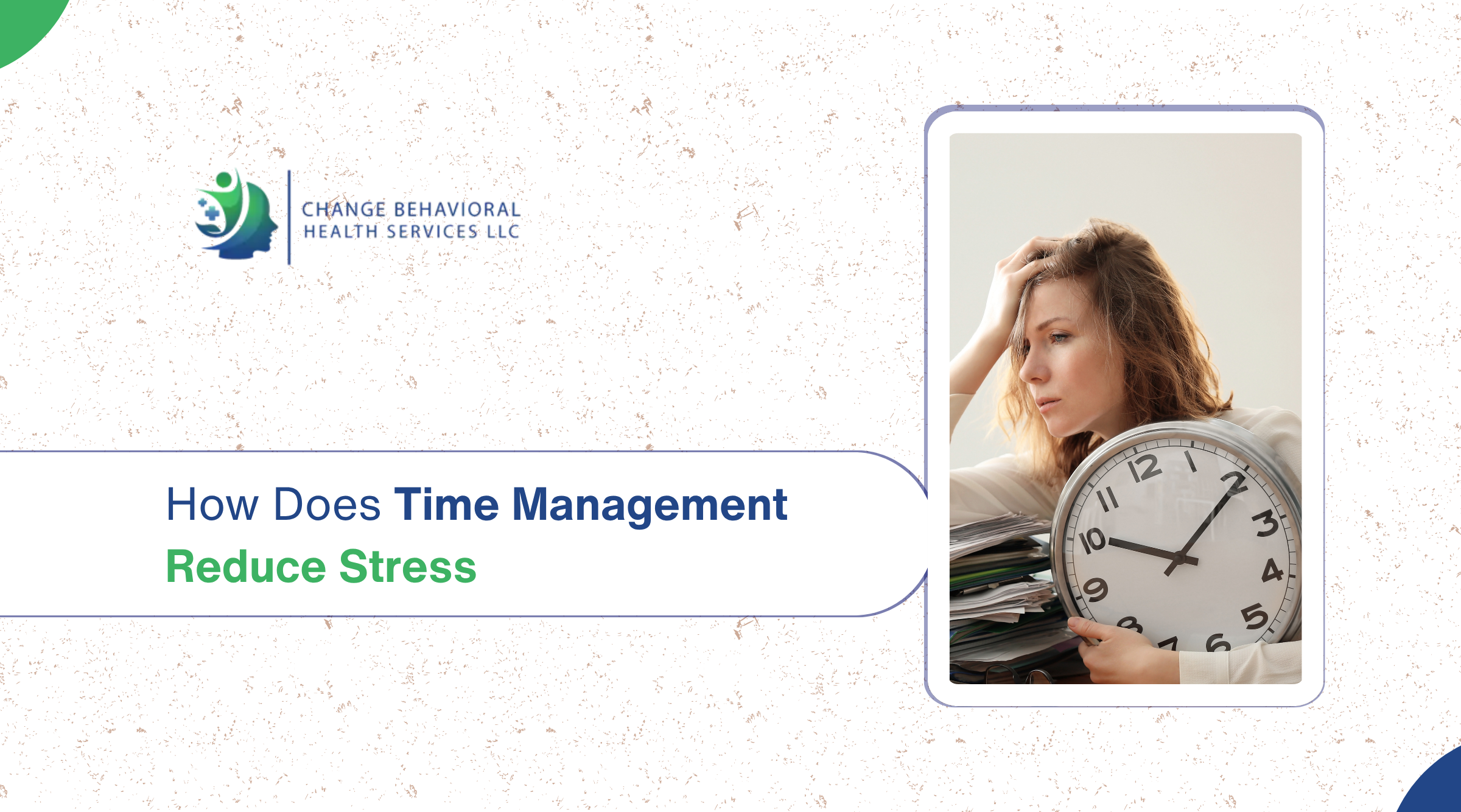
Some exhaustion comes not from doing too much, but from feeling like you are always about to drop something.
A to-do list in your head that never gets any shorter. That nagging subconscious murmur of uncompleted tasks.
Many people think of stress as something that just goes hand in hand with a busy life. Much of what you may experience as unavoidable pressure, too, is born out of a lack of an effective system for your time. With no structure, your mind is in a constant, and a low-grade panic, doing its best to hold it all together at once.
Improved time management doesn’t mean life will be perfect. However, it can go a long way in silencing that noise.
Feeling Overwhelmed Is Often a Time Problem in Disguise
Things feel out of control and stressgenerally spikes. Having no idea what needs to happen, in what order or if you can even get it all done, is one of the quickest paths to feeling out of control.
Without providing a little structure for your time, things begin to happen almost of their own accord:
- Your brain thinks everything is an emergency and that is the recipe for anxiety
- You spend mental energy trying to remember tasks instead of actually doing them
- Small decisions become draining because you have no framework to make them quickly
- By evening, you feel busy but not sure what you actually accomplished
It is what happens when the demands on your attention outpace your ability to sort through them. A simple structure around your time changes this, not by adding more discipline to your life, but by taking the guesswork out of it.
Why Planning Actually Makes You Feel Calmer
Writing things down should not be as powerful as it is, but anyone who has ever made a list on a chaotic morning knows the relief it brings. That relief has a real explanation behind it.
When your tasks stay only in your head, your brain keeps cycling back to check on them. It is trying to make sure you do not forget anything important, but the effect is that you never fully settle. You are always partially elsewhere, even in the middle of something else.
Getting those tasks out of your head and into some kind of plan gives your brain permission to stop scanning. The pressure does not vanish, but it becomes something you can look at rather than something chasing you.
A simple plan helps in a few specific ways:
- You stop relying on willpower and memory, both of which run out quickly
- You can be fully present in one thing without worrying about everything else
- You can actually see when you are overcommitted, which makes it easier to push back or ask for help
- You end the day knowing what got done, which matters more than people realize
The plan does not have to be elaborate. A short list of priorities written the night before can change how the whole next day feels.
Ways to Manage Your Time Without Actually Burning Out
Decide what your day is about
- Ask yourself what would feel like a real win by the end of the day
- Do that thing first – when your focus is freshest
- Let yourself off the hook for everything that was never realistic to begin with
Make tasks small enough to actually start
Big, vague tasks are stressful to look at because your brain has no idea where to begin. “Work on the project” does not tell you anything. “Write the first two paragraphs” does.
- Break anything large into the next specific action you could take
- The smaller the step, the easier it is to start and starting is usually the hardest part
- Finishing a small step feels good and keeps you moving forward
Stop treating rest as something you earn
Cutting out breaks to get more done sounds logical but usually backfires. Fatigue makes everything slower, harder, and more frustrating! A short pause mid-morning is not laziness. It is maintenance.
- Even ten minutes away from a task can reset your focus
- Rest built into the day reduces the frantic feeling that never seems to ease up
- You will make better decisions when you are not running on empty
Get comfortable saying no
Every commitment you agree to takes time that is not available. And saying yes to things out of guilt or awkwardness is one of the quickest paths to becoming busy.
- All it takes is a blunt, non-continuing reasoning as ‘I can not process this right now.’
- There are only so many hours in the day: saying no to something is saying yes to everything you already have on your plate
When the Stress Is About More Than Your Schedule
And managing your time better really helps. Not all the stress is resolved with an improved calendar. When you have tried getting organized and the red flag still exists, or the burden is too heavy to lift yourself, then that comes to your radar.
Stress that sticks around or makes you feel like nothing can be accomplished is usually a sign that something else is wrong. This could be anxiety, depression, complete burnout, or all three. Things like these don’t improve by mere organization.
It may be time to talk to someone if you notice:
- An anxiety that will not subside when nothing is obviously wrong
- Struggling to sleep most nights
- A feeling of dread about ordinary things like work, errands, or social plans
- Exhaustion that rest does not touch
- Pulling away from people or things that used to matter to you
Recognizing this is not admitting defeat. It is being honest with yourself about what kind of support you actually need.
Time Management Works Best Alongside Mental Health Support
Structure helps. Routines help. Good sleep and movement help. However, those habits that are supposed to lower stress can be hard to build when the stress is making everything else more difficult!
What is often most helpful is just someone to talk to who has the experience of knowing what hides under all that overwhelm. A counselor or therapist can help guide and direct you to see the patterns you are caught in and what things would actually be helpful.
Change Behavioral Health Services works with adults and families around Gaithersburg, Maryland area and also the DC, Maryland and Virginia regions.
Get some support.
Visitchangebhservices.com to schedule a consultation!