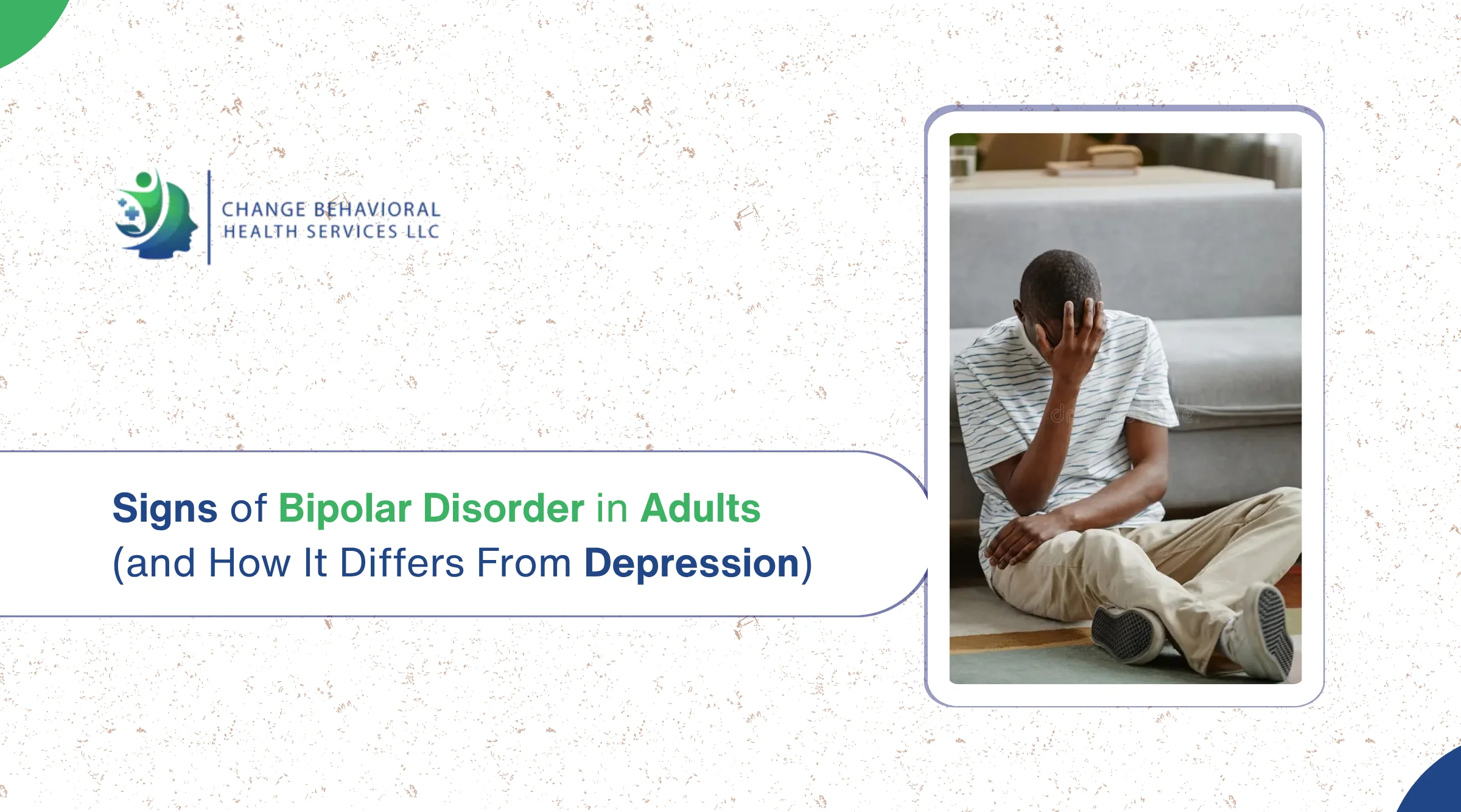
Mood shifts are a part of life. It’s not wrong to feel down after a tough patch or energized following excellent news. But when mood, energy, and behavior shift into separate, severe episodes lasting days or weeks, and affecting job, relationships, or functioning in daily life, it may be a sign of a mood illness.
Bipolar disorder and severe depression are two conditions that are commonly confused. Both can involve spells of very low mood, tiredness, and loss of interest. The fundamental difference is that bipolar disorder also includes episodes of extremely high or irritable mood and energy, called mania, or a milder variation called hypomania. Knowing these disparities helps patients get the correct evaluation and support.
Understanding Bipolar Disorder in Adults
Bipolar disorder is a mood disorder that involves periods of abnormally high mood and energy (mania or hypomania) and, in most cases, episodes of depression. These are more than just your average mood swings. They deviate from a person’s normal self and last for extended periods.
There are a lot of ways. Bipolar I and bipolar II disorder have specific criteria for diagnosis. Bipolar I disorder includes full manic episodes. Bipolar II disorder is characterized by hypomanic episodes and major depressive episodes. Others have blended features, where feelings of elevated mood and depression occur simultaneously. Many people return to a more stable baseline of mood between episodes, but some may have lingering residual symptoms.
Those with bipolar disorder most often first come to medical attention during a period of depression. Some may remember times of higher mood as times of high productivity, creativity, or just feeling “really good,” which may make them more difficult to identify as part of a clinical pattern.
Signs of Elevated Mood Episodes (Mania and Hypomania)
The distinguishing feature of bipolar disorder from depression is the occurrence of elevated episodes. These periods are marked by a significant, lasting change in mood and energy.
Common signs include:
- Feeling unusually high, euphoric, or very irritable
- A significant increase in energy or activity
- Need less sleep (you wake up refreshed after only a few hours of sleep)
- Talking more than normal, talking fast, feeling pressure to keep talking
- Racing thoughts or moving quickly from one idea to the next
- Having a short attention span
- More goal-focused activity (such as starting lots of projects, focusing more on work or social plans)
- Inflated self-esteem or feelings of being unusually capable or important
- Engaging in risky or impulsive behaviors (e.g., spending sprees, impulsive decisions, increased sexual activity, or other activities that could have negative consequences)
A full manic episode means that these changes are so extreme that they cause noticeable difficulty in day-to-day life or require hospital care. Hypomania has similar symptoms, but they are not as intense, and it does not last as long and does not cause the same level of impairment. Many people with hypomania are functional and may even feel more productive, which can make the episode more difficult to spot as a problem.
It is important to note irritability. Not every episode of elevation feels good. Instead of classic euphoria, some people have primarily irritable, agitated, or “wired” mood states.
Signs of Depressive Episodes in Bipolar Disorder
Depressive episodes of bipolar disorder are very similar to major depression. Common experiences are:
- Prolonged low, empty, or hopeless mood
- Loss of interest or pleasure in activities that used to be important
- Major changes in sleep patterns (either too much or too little)
- Changes in appetite or weight
- Fatigue or lack of energy
- Excessive guilt or feelings of worthlessness
- Trouble concentrating or making decisions
- Less able to sit still or slower movement or speech
- Ideation of death or suicidal ideation
Symptoms are present most of the day, nearly every day, for a prolonged period, and interfere with functioning. The depressive phase is often the reason a person comes into care, and bipolar disorder can be mistaken for depression alone if a history of elevated periods is not carefully explored.
How Bipolar Disorder Differs from Depression
The main difference is whether mania or hypomania is present. Major depressive disorder consists of depressive episodes without any history of elevated mood and energy episodes that meet clinical criteria.
Other functional differences include:
- Energy and activity levels: Depression often causes a low energy state. Bipolar disorder is characterized by mood swings between low-energy depressive states and high-energy elevated states.
- Sleep changes: People experiencing high episodes often require much less sleep and yet feel energetic. In depression, sleep may go up or down, but energy remains low.
- Self-image: Depression is often accompanied by low self-esteem. Inflated confidence or feelings of having special abilities may occur during elevated episodes.
- Behavior and risk: Elevated episodes correlate with more impulsive or high-risk behaviors than pure depression.
- Course over time: Bipolar disorder is marked by distinct episodes that come and go. Depression may be more persistent or recurrent without the elevated poles.
- Antidepressant response: Some people with undiagnosed bipolar disorder, on antidepressants taken alone, can trigger elevated symptoms. Part of the reason is that a full history matters before medication is started.
These patterns are not always apparent. Mood can shift slowly, high moods can feel good in the moment, and mixed states can muddy the waters. An accurate diagnosis usually relies on a thorough clinical assessment, which includes history, family observations, and symptom timelines.
Why Accurate Recognition Matters
The correct diagnosis helps to choose the treatment. The treatment approaches that succeed in depression alone are not always the best initial choices for bipolar disorder. Mood-stabilizing strategies, careful medication choices, and some forms of psychotherapy are often important components of care for bipolar disorder. Early recognition may reduce the frequency and severity of future episodes and lead to more stability over time.
Family and close friends may notice patterns such as times when the person isn’t sleeping much and is very active, or when they make impulsive decisions before the person experiences them. It is useful to share these observations during an evaluation.
Practical Tips for Recognizing Patterns and Seeking Help
- Keep a simple journal or use an app to track your mood, energy, sleep, and activity levels over time. The more records you have, the more obvious the patterns are.
- Note any times you needed much less sleep but still felt energetic or driven.
- Solicit feedback from trusted individuals regarding any noticeable changes in your behavior or judgment.
- Be honest with your provider about low periods and any times you felt unusually “up,” productive, irritable, or impulsive.
- Don’t self-diagnose. Symptoms often overlap, and only a qualified clinician can make an accurate assessment.
- If you’re in a low period, reach out for support; don’t wait for motivation to come back.
Support Available Through Change Behavioral Health Services
Change Behavioral Health Services offers a full psychiatric evaluation and medication management with psychoeducation and counseling to adults with mood and other mental health issues. We offer care through telehealth and at selected locations throughout Washington, D.C., Maryland, and Virginia. Our approach is person-centered, with an emphasis on accurate assessment, clear education, and collaborative treatment planning.
If you or someone you know is struggling with severe mood swings, changes in energy and sleep, or symptoms of depression that may include a history of high periods, a professional evaluation can help clarify and guide the way.
Moving Toward Clarity and Stability
Bipolar disorder, like depression, involves low points, but the presence of distinct elevated episodes sets them apart. Knowing the whole cycle of symptoms from the troughs to the peaks means you can support better and manage longer-term more accurately.
There is hope for those suffering from mood disorders. With accurate diagnosis, appropriate care, and ongoing strategies for stability, many can experience meaningful improvement in their daily functioning and quality of life. If any of the indicators mentioned here are present, contact us for a complete evaluation, which is a good and hopeful start.
FAQs
Can someone have bipolar disorder if they mostly feel depressed?
Yes. And with bipolar disorder, more people spend more time in depression than mania, especially bipolar II. The occurrence of even evident hypomanic spells differentiates the diagnosis from depression alone.
Is feeling very productive or creative a sign of hypomania?
Increased productivity or creativity can occur during hypomania, but the whole picture includes additional changes such as less sleep, racing thoughts, or changes in judgment. Feeling happy and doing a lot is not a clinical concern in itself.
How is bipolar disorder diagnosed?
Diagnosis is based on a complete clinical history of the episodes of mood, their duration, severity, and influence on functioning. There is no single blood test or brain scan that confirms it. Family input and recording symptoms over time frequently help.
Can bipolar disorder develop later in adulthood?
Symptoms usually begin in late adolescence or early adulthood, but can occur later. A comprehensive review examines the entire history regardless of age.