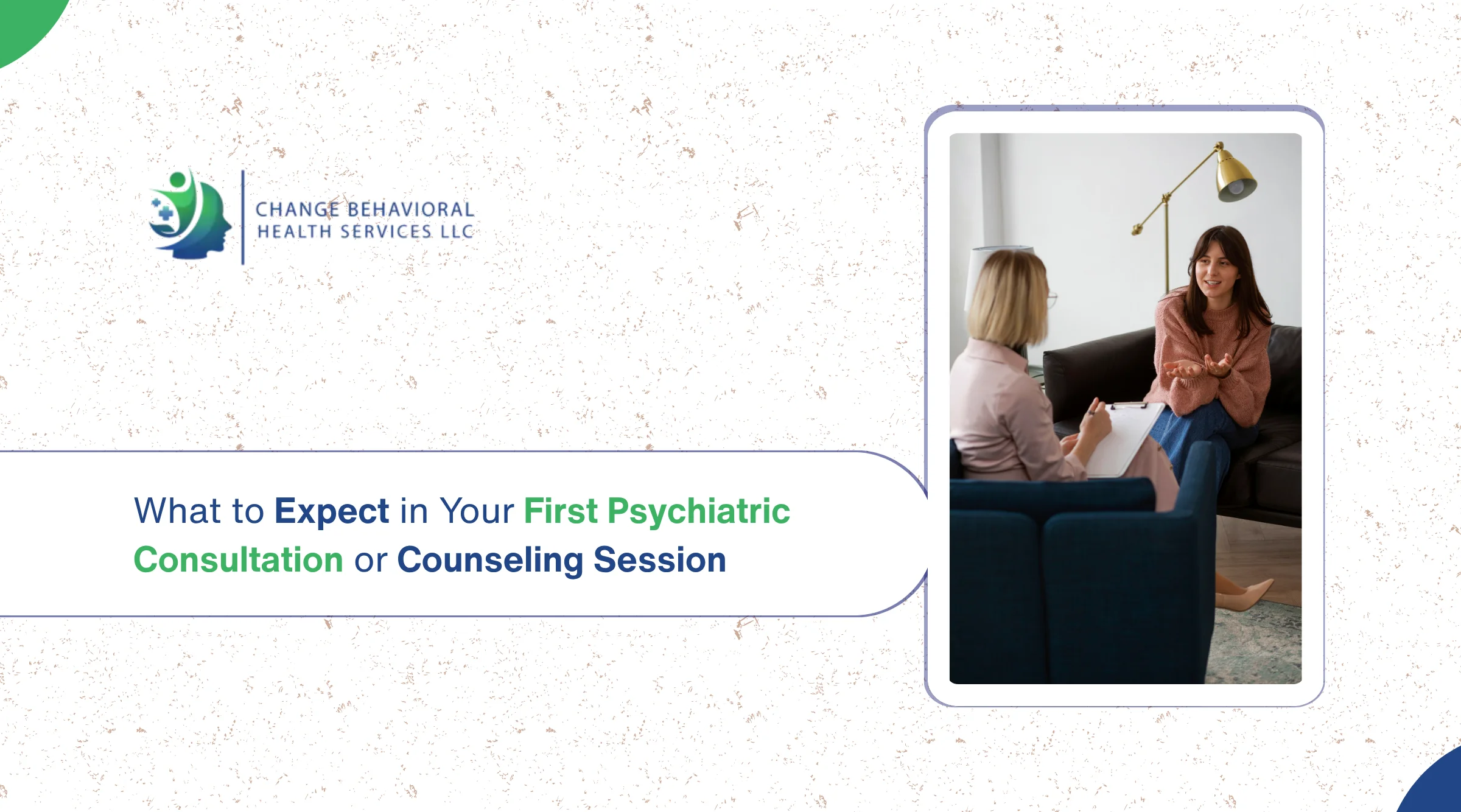
Taking the step to make your first appointment for mental evaluation or counseling means a lot. For many people, there is a mixture of hope, fear, and uncertainty before that first appointment. Learning what usually happens helps lessen some of those feelings and make you feel more prepared and in charge.
Preparing for Your First Session
A little bit of preparation can make a huge difference in making the appointment feel productive and less daunting.
you will usually complete intake paperwork. You may be asked questions about your medical history, current medications or supplements, past mental health treatment, family history, and the reasons that brought you here. Doing this thoughtfully helps the clinician begin with a clearer image so that more time in the session may be spent in conversation instead of gathering basic facts.
Here are some useful recommendations that many find helpful:
- Write down the main problems you wish to discuss, when they began, how they impact your day-to-day life, and any patterns you have observed.
- Write down any questions you have regarding the process, treatment options, or what the clinician’s approach looks like.
- List all the medicines you are now taking, their dosages, and any mental medicines you have taken in the past (and what has or hasn’t worked).
- If your session is telehealth, check your internet connection, camera, and quiet private space in advance. Have a backup plan, like a phone number, in case of technical difficulties.
- Arrive a few minutes early (or log in early for virtual visits), so you’re able to settle down and not feel pressured.
It’s quite normal not to know how much to share. You set the pace. Any clinician will tell you that trust takes time.
What Happens During a Psychiatric Consultation
A psychiatric consultation (sometimes called a psychiatric evaluation) is often more structured in that it may include an examination of whether medication might be part of your care. The physician, often a psychiatrist or psychiatric nurse practitioner, wants to understand your symptoms in relation to your overall health, history, and goals.
Generally, the session begins with introductions and a brief explanation of confidentiality and how the appointment will proceed. From there, the conversation frequently includes:
- How you are feeling at the moment and how it is impacting your career, relationships, sleep, energy, or day-to-day life.
- A review of your psychological and medical history, including any previous diagnoses, hospitalizations, or treatments.
- Discussion of substance use, if applicable, as it commonly overlaps with mental health.
- Questions regarding family history of mental health issues because genetics and environment can play a role.
- A mental state exam. This is a calm, observational phase of the session where the doctor will be noting things such as your mood, mental process, concentration, and how you are relating in the moment. It is not a test of pass or fail.
The physician will often give first impressions around the end of the session. This may include possible diagnoses (if sufficient information is provided), recommendations for additional examination if needed, and discussion of treatment choices. These alternatives can include medication management, referral for counseling or therapy, lifestyle factors, or some combination. The goal is shared decision-making; you need to walk away with a clear understanding of future steps and an opportunity to ask questions.
Many individuals value that the clinician takes the time to explain the logic behind any suggestions in simple terms, not medical jargon.
What Happens During a Counseling Session
Counseling and psychoeducation-based sessions concentrate more on the therapeutic relationship and skills-building from the beginning. A clinician (often a therapist, counselor, or other certified mental health professional) provides a safe environment for you to explore ideas, feelings, and patterns.
The first session normally contains:
- Getting to know each other and building a sense of safety and rapport.
- Talking about your reasons for coming in and what you hope to get out of counseling.
- Collecting pertinent background information to assist the clinician in understanding the context of your current difficulties.
- Start to see the qualities you already have, as well as areas where fresh tools or views can be helpful.
- Explore how counseling works within that particular practice, covering the frequency of sessions, the strategies used (e.g., cognitive-behavioral techniques, psychoeducation on mental health, or other evidence-based methods), and what development could look like over time.
The first therapy appointment is usually more conversational than a more medically oriented psychiatric consultation. You may leave with some initial discoveries or easy methods to attempt between sessions. It is about working together and empowering you, so you learn more about your mental health and practical strategies to take care of it.
Counseling sessions and psychoeducation-oriented sessions are focused from the beginning on the therapeutic connection and practical skill-building. A clinician (often a therapist, counselor, or other certified mental health professional) provides a safe environment for you to explore ideas, feelings, and patterns.
The first session normally contains:
- Getting to know each other and building a sense of safety and rapport.
- Talking about your reasons for coming in and what you hope to get out of counseling.
- Collecting pertinent background information to assist the clinician in understanding the context of your current difficulties.
- Start to see the qualities you already have, as well as areas where fresh tools or views can be helpful.
- Explore how counseling works within that particular practice, covering the frequency of sessions, the strategies used (e.g., cognitive-behavioral techniques, psychoeducation on mental health, or other evidence-based methods), and what development could look like over time.
The first therapy appointment is usually more conversational than a more medically oriented psychiatric consultation. You may leave with some initial discoveries or easy methods to attempt between sessions. It’s about teamwork and enabling you to have a better awareness of your mental health and how to manage it in practical ways.
How Psychiatric Consultations and Counseling Sessions Differ (and Overlap)
Listening and understanding are the priorities in both types of initial sessions. The main differences are in focus and possible outcomes.
A psychiatric consultation is probably going to be more focused on clarity of diagnosis and the role of medication or other medical measures. It might be a little more structured and history-driven.
Therapy frequently starts with an emphasis on relationship, exploring emotions, and skill building. Medication is not typically a key focus unless the counselor is working in close collaboration with a prescriber.
In many practices, both approaches are offered as complements to one another. Some people start with a psychiatric assessment and add counseling, while others start with counseling and see if medication is needed. Integrated treatment, in which psychiatric and counseling physicians interact when appropriate, generally leads to more cohesive help.
After the Session: Next Steps and What to Expect Moving Forward
By the end of the session, you should have a clear idea of recommendations and a follow-up plan. This may involve scheduling a follow-up visit to manage medications, commencing ongoing therapy, or making recommendations for extra assistance.
You may also receive instructional resources or simple between-session ideas. Typically, the first session will raise fresh questions/feelings. It’s really useful for a lot of individuals to write down things afterward, when it’s all fresh.
If something didn’t work, be it the communication style, advice, or just the interpersonal chemistry, it’s okay to look for another provider. Getting the appropriate fit is important for long-term progress.
Practical Tips for Getting the Most from Your First Appointment
- Be as open as you feel comfortable being. Clinicians are educated not to judge when they hear hard facts.
- If you don’t understand something, ask. Don’t be afraid. There’s no issue with asking for clarification; that means you’re engaged.
- Observe how you feel throughout and after the session. One of the best signs of a healthy working relationship is feeling heard and valued.
- Be aware that one session is the start of a process. Lasting change usually requires time and continued support to grow.
- Treat a virtual appointment the same as you would an in-person visit. Minimize distractions and allow yourself some quiet time after the meeting to process.
Taking the First Step
The initial step is usually the most difficult. Most patients find the experience more supportive and less scary than they thought once they are in the room (or on the screen) with an informed, empathetic physician. At Change Behavioral Health Services, we recognize how meaningful that first conversation can be. Whether you connect through telehealth or in settings where in-person support is available, we focus on creating a respectful, collaborative space so you can begin with clarity and confidence.
Contact us today to schedule a consultation. The aim is not perfection, but growth, comprehension, and a clearer route forward, suited for you.
FAQs
How long does a first psychiatric consultation or counseling session usually last?
The initial appointment is normally longer than any follow-up appointment to enable sufficient time for discussion and to develop a good history.
Will I leave with a diagnosis or medication after the first visit?
Not necessarily. Some individuals get clear impressions and a treatment plan immediately. Some need more information, or more time, to lock down a detailed plan. Medication decisions are collaborative and based on careful examination.
What if I feel nervous or freeze up during the session?
This is super common. Clinicians expect it and are trained to make clients feel more comfortable. You can express that you feel nervous; that frequently opens the door to a more encouraging discourse.