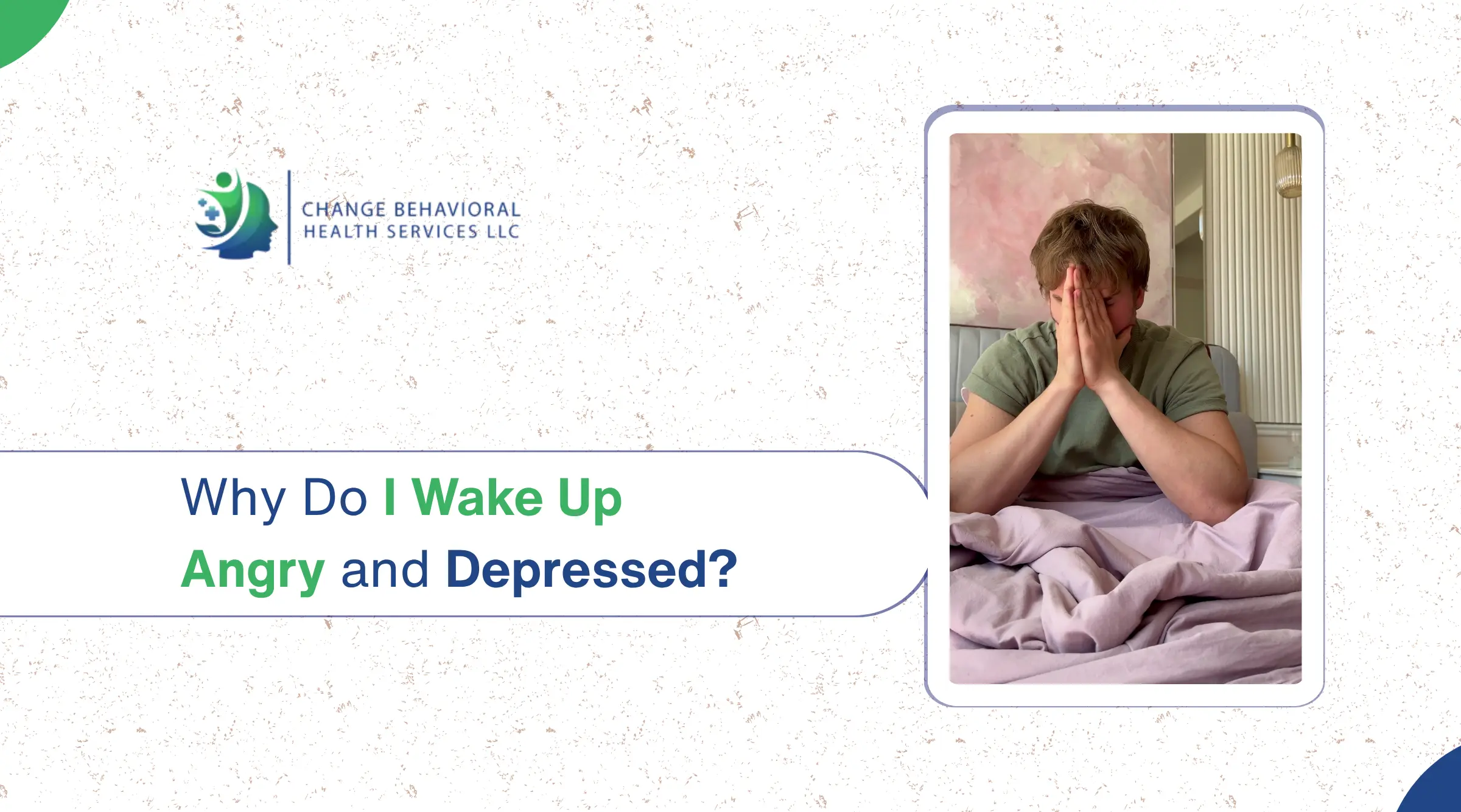
Some mornings the alarm goes off, and you are already annoyed before your feet hit the floor.
Not at anything specific. Just annoyed, and a little flattened underneath it, like the day already feels like too much, and it has not even started yet.
People type “why do I wake up angry and depressed” into a search bar more than you would think.
There is an actual explanation for it, and it has nothing to do with willpower or sleeping wrong.
It Is a Real Pattern
Doctors have a name for this. Morning depression describes symptoms that hit hardest early in the day and loosen up some by afternoon or evening. It shows up in a meaningful chunk of people with depression, not everyone, but enough that researchers track it as its own thing.
So waking up sad with no clear trigger, no bad dream, nothing that happened the night before, fits a known pattern. The timing is not a coincidence.
Your Body Is Doing a Few Things at Once
Cortisol spikes shortly after you wake up. That is normal and happens to everyone, depressed or not, it is part of what gets you moving in the morning. For people already dealing with depression or anxiety, that same spike can land as dread or irritability instead.
Sleep is part of it too. Depressionmesses with sleep quality in ways that do not always show up as fewer hours. You can sleep eight hours and still wake up like you got two, which goes a long way toward explaining waking up angry on mornings where nothing else seems off.
And then there is just quiet. First thing in the morning, before texts and traffic and everyone else’s stuff fills your head, whatever you have been carrying gets a few uninterrupted minutes with you.
Sometimes It Looks Like Anger, Not Sadness
Depression does not always look sad. For a lot of people it looks irritable. Snapping at your partner over something small. Zero patience for things that would not normally bother you. That short fuse is depression too, it just gets talked about less.
If why do I wake up in a bad mood is a thought you have most mornings, irritability might just be your version of this, even if sadness is the symptom that gets more attention in general.
- A flat, heavy mood that takes a while to lift
- Short temper, more than usual
- Dreading the day before you have even gotten up
- Tired even after a full night of sleep
- Everything feeling like more effort than it should
Why Mornings Specifically?
“Why is my depression worse in the morning?” comes up constantly in first appointments. Usually it is a stack, not one single cause.
Cortisol doing its thing, sleep that was lower quality than it looked, and a quiet head with nothing to distract it yet, all hitting around the same fifteen minutes.
Some people connect depression worse in morning pretty directly to what is waiting for them that day. If life moving too fast is basically your normal right now, too much on the list and no room to breathe, your brain might start bracing for that the second you wake up, before coffee, before anything.
How to Tell If It Is More Than a Rough Patch
One bad morning after a bad night happens to everyone. That is not what this is about. The thing worth paying attention to is how often it is happening.
Depression on waking that shows up most mornings for a few weeks running, especially if appetite, energy, or interest in stuff you usually like are also off, is not something to just wait out. That pattern is worth bringing to someone.
A Few Things That Take Some of the Edge Off
None of these fix depression on its own, but they help more than people expect:
- Getting outside or near a window soon after waking, daylight helps reset your internal clock
- Waking up around the same time daily, weekends too
- Giving yourself a slower start instead of opening your phone the second your eyes open
- Talking to someone if this has been going on for more than a few weeks
You Should Not Have to Just Push Through It
If your mornings have been like this for a while, it is worth saying that out loud to someone and not just something you figure out by yourself.
Change Behavioral Health Servicesspecializes in psychiatric evaluation, medication management, and counseling offered on an ongoing basis to adults experiencing clinical depression and mood symptoms that do not always conform to a textbook diagnosis.
Telehealth services across Washington DC, Maryland and Virginia, or in-person services for clients in residential and care settings. But if mornings have been grim more often than not these days, it is certainly worth mentioning to someone who can help.
Phone: (301) 732-7721
Email: changebhservices@gmail.com
Hours: Monday to Friday, 9 AM to 5 PM