You had every intention of going to the gym. You meant to cook. You were going to work on that thing you keep pushing off. And then 7 pm came and you ordered takeout and watched something you didn’t even really want to watch and went to bed feeling behind again.
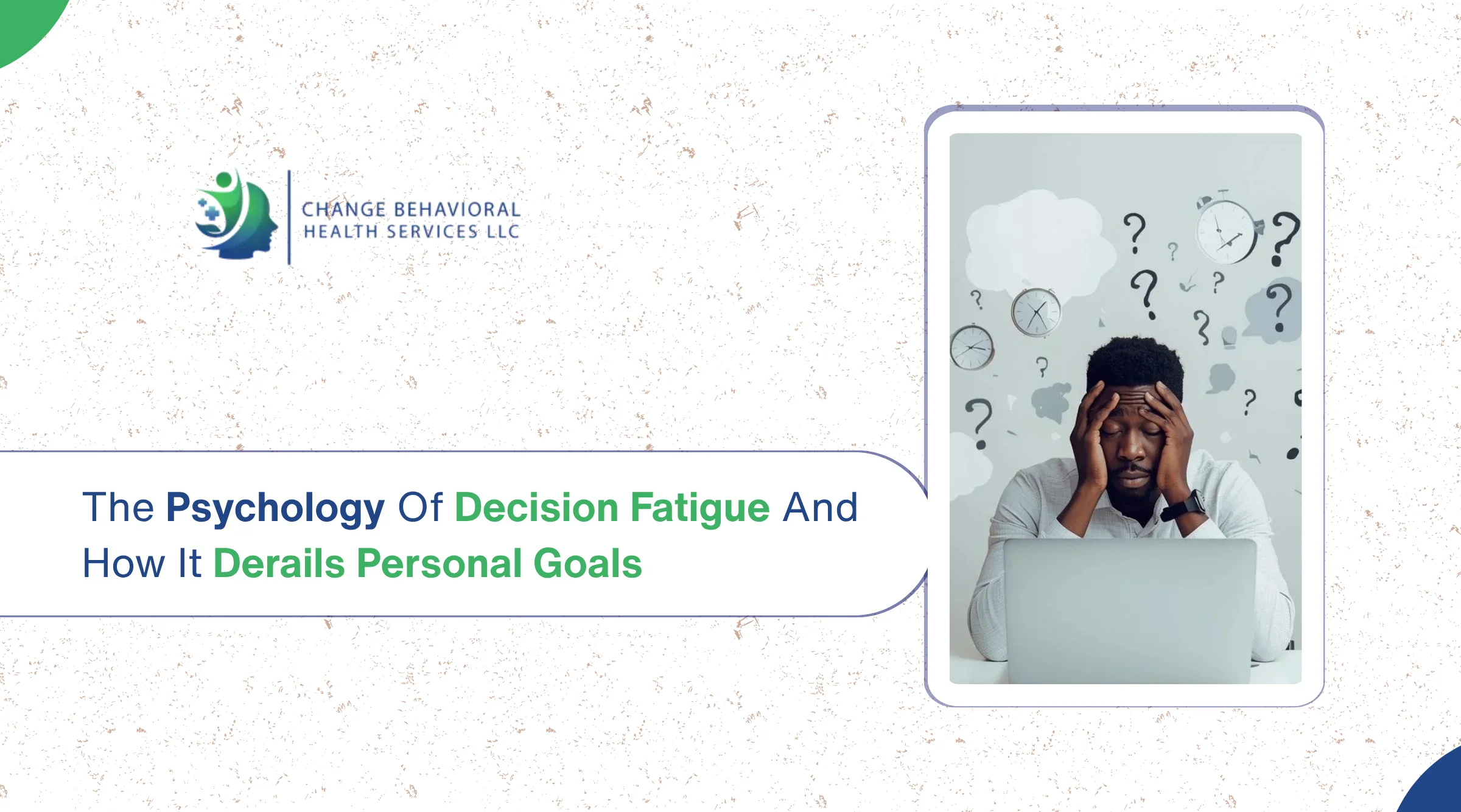
That’s not a motivation problem. It’s not a discipline problem. It’s what happens when a brain that has been making decisions all day gets asked to make a few more important ones at the end of it.
The Brain Has a Budget
The prefrontal cortex runs deliberate decision-making, impulse control and long-term thinking. It doesn’t have unlimited capacity. Under sustained demand it slows down, and the quality of what comes out drops.
A well-publicized study in the late 1990s by Roy Baumeister found that willpower and decision-making rely on the same limited resource, and that this resource gets depleted over a day’s worth of use.
Subsequent studies have challenged some of this model, but the main point remains: People make worse decisions later in the day.
Why Your Goals Get Hit the Hardest
Personal goals almost always live at the end of the day. Exercise, cooking at home, working on something that actually matters to you, calling the person you’ve been meaning to call. These get scheduled into the hours after everything else has already taken what it needed.
So the gym doesn’t happen, not because you stopped caring, but because the decision to go up against a comfortable default requires prefrontal effort that’s already mostly gone. The motivation existed at 9am. It got spent on meetings and emails and forty small choices that didn’t feel like choices at the time.
And when the brain is depleted it reaches for whatever is easiest. Same takeout order. Same couch. Same scroll. Not because that’s what you want. Because choosing anything different requires effort the brain can’t generate right now.
Anxiety and Depression Make It Worse
Both conditions drain decision-making resources faster than a typical day already does.
Anxietyattaches weight to decisions that don’t need it1 A simple choice becomes something to second-guess – which means it costs three times as much cognitive energy as it should. By mid-afternoon an anxious person has spent the equivalent of twice the decisions a non-anxious person has.
Depressionhits the recovery side. Sleep is where the prefrontal cortex restores itself. Depression disrupts sleep, so you start each day with a partial tank, spend it faster because everything requires more effort than it used to, and arrive at your goals with nothing left. The goal is still there. The brain can’t reach it.
A Few Things That Actually Help
- Put the things you care about earlier in the day, before the budget gets spent on everything else
- Build routines around the behaviors you want to be consistent, a habit removes the decision from the queue entirely
- Take real breaks mid-day, the parole board data showed recovery is real and fast
- Stop reading a depleted evening as evidence you don’t actually want your goals, you do, the timing is just wrong
When It’s More Than a Scheduling Problem
One bad week is decision fatigue. Months of consistently not reaching your own goals despite genuinely wanting to is usually something else underneath it. Anxiety, depression, ADHD, chronic stress. These don’t just make you tired. They change how the brain allocates and spends the resources that goal-directed behavior depends on.
If restructuring your day isn’t touching it, the problem may be clinical rather than logistical.
Change Behavioral Health Services
Change Behavioral Health Services offers psychiatric evaluation, psychiatric medication management, and counseling tailored to the individual’s situation for adults experiencing anxiety, depression, ADHD and chronic stress. Telehealth services are offered throughout Washington DC, Maryland, and Virginia and in person in residential and care settings.
If your goals continue to slip and you don’t know why, it is worth having someone who can look at it and understand what is going on.
Phone – (301) 732-7721
Email – changebhservices@gmail.com
Location – 18310 Montgomery Village Avenue, Suite 300 #1107, Gaithersburg, MD 20879
Hours – Monday to Friday, 9 AM to 5 PM