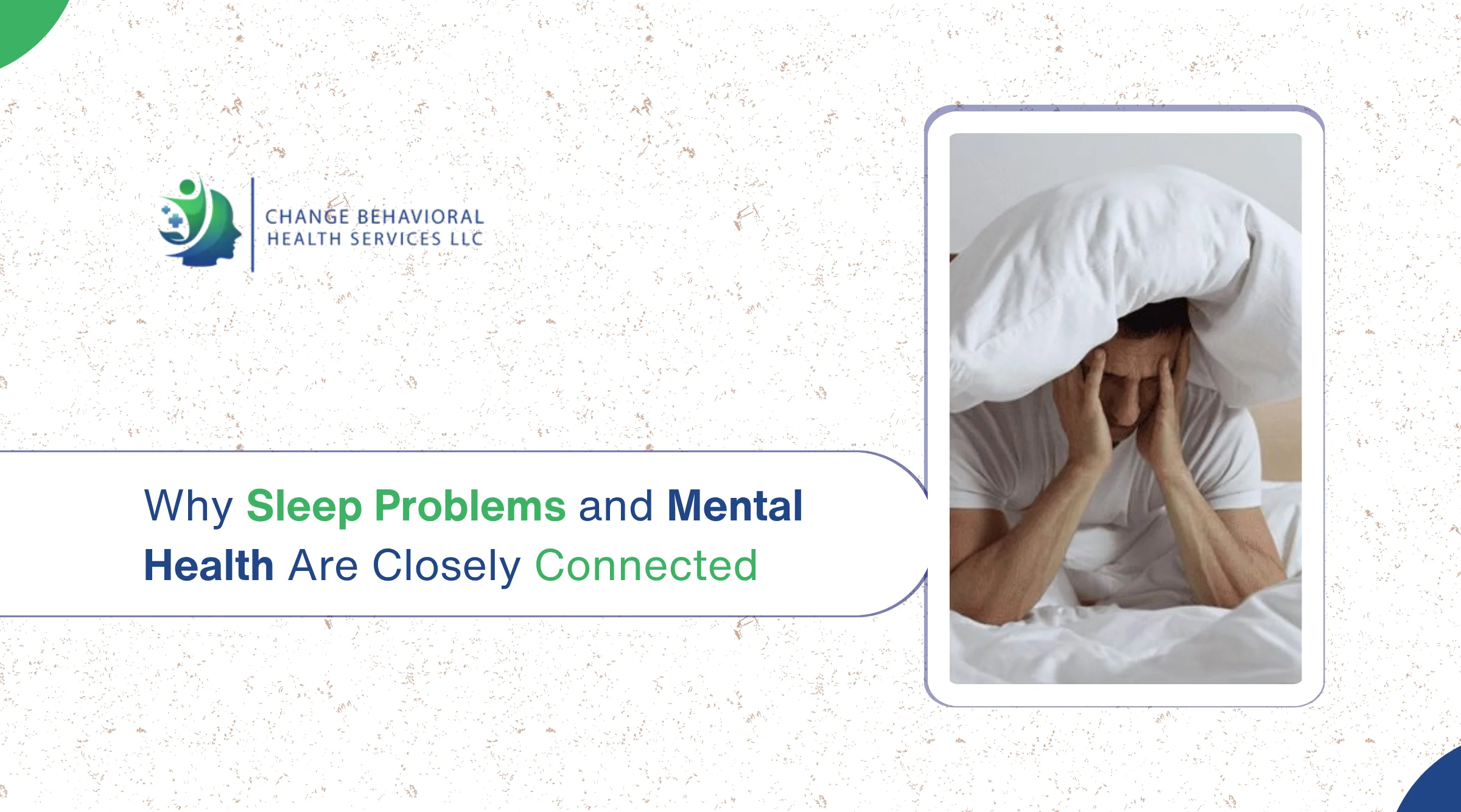
Most people know that a rough night’s sleep might make them irritable, foggy, or less resilient the next day. The time course of the interaction between sleep and mental health is less well understood. This is a two-way street: long-term sleep issues can enhance the risk of depression, anxiety, and other mental health problems, while depression and anxiety often interrupt sleep.
Such a two-way link establishes a loop that is hard to escape without deliberate help. Understanding the relationship between sleep and mental health can help shed light on why treating one typically improves the other and why sleep should be a key aspect of total mental wellness.
The Bidirectional Relationship Between Sleep and Mental Health
Sleep is more than rest for the body. Sleep gives the brain time to absorb emotions, consolidate memories, regulate stress hormones, and restore systems that support mood and clear thinking. And if sleep is interrupted over and over again, these healing mechanisms cannot do their thing.
Sleep deprivation could impair emotion regulation. Irritations seem more important, negative thinking lasts longer, and stress recovery is reduced. This emotional fragility might over time contribute to or intensify depression and anxiety.
Mental health problems also often disturb sleep. If you have racing thoughts, anxiety, low mood, or hyperarousal, you may have trouble falling asleep or staying asleep. Some people have difficulty falling back asleep when they wake up in the early morning hours, while others sleep longer than usual but still feel unrefreshed when they wake up. These patterns are common in depression, anxiety disorders, bipolar disorder, post-traumatic stress, and other illnesses.
Sleep problems exacerbate the symptoms of mental health conditions, which in turn exacerbate sleep problems, creating a vicious cycle. Usually, breaking the cycle solves it for both of you.
How Sleep Problems Affect Mood and Emotional Regulation
Sleep deprivation and sleep that is interrupted can damage the brain’s ability to control emotions. The systems that serve to put unpleasant experiences into perspective and reduce overreactions become less effective. This could look like:
- Increased sensitivity to feelings
- Difficulty concentrating or making decisions
- Increased irritability or feelings of hopelessness sentiments
- Lower motivation & energy
- Heightened stress response
Chronic sleep loss also impairs the body’s stress response system. Feeling on edge during the daytime can be due to changes in stress hormones and increased arousal. Over extended periods of time, these changes enhance vulnerability to mood and anxiety symptoms.
Sleep timing is important too. Irregular sleeping patterns, or routinely going to bed later than normal, may interfere with the body’s internal clock, and research has shown this is associated with increased mood troubles. Having a regular sleep and wake schedule helps us to be more emotionally stable.
How Mental Health Conditions Disrupt Sleep
Restorative sleep can often be disrupted by symptoms of mental health problems. Common patterns are:
- Trouble sleeping because your mind is racing or you’re anxious
- Frequent awakenings during the night
- Getting up early in the morning and being unable to go back to sleep
- Sleeping too much and still feeling tired
- Sleep that is not refreshing
Sleep is generally low quality and may be decreased or enhanced in those with depression. Anxiety often makes it hard to quiet the thoughts at night. In bipolar disorder, a reduced need for sleep may be an indication of an elevated mood episode. Trauma-related disorders may include hypervigilance or nightmares that disrupt sleep.
These sleep difficulties are not only secondary symptoms. If they continue when the mood improves, they increase the risk of relapse. So, you may work on sleep directly, and that can help with longer-term stability.
Shared Biological Pathways
Sleep and mental health processes are intertwined in the brain and body. Hyperarousal (a state of heightened awareness) is a hallmark of many anxiety and mood disorders as well as insomnia. Circadian rhythms that control sleep also help control mood. The two are also connected by inflammation and changes in brain chemicals involved in emotional processing.
These routes are common, so getting better sleep can help alleviate symptoms of mental health issues, and improving mental health issues can often lead to better sleep. Interventions in one area often generate benefits in the other.
Practical Ways to Support Better Sleep and Mental Health
Small, consistent changes can start the cycle to break. Think about these:
- Set a consistent bedtime and wake-up time every day, even on weekends, to help your body’s internal clock.
- Have a calm wind-down hour before bed: dim lights, put away screens, and do quiet activities.
- Reserve the bed for sleep, not scrolling, working, or worrying.
- Try to avoid caffeine later in the day and be careful of alcohol, which can break up your sleep.
- Get some exposure to natural light earlier in the day and avoid bright light in the evening.
- Try a simple relaxation exercise or a bit of quick journaling before bed to help quiet racing thoughts.
- Get regular movement during the day. Exercise is important for sleep and mood.
If sleep problems continue despite these measures, or if they are linked with persistent low mood, anxiety, or other mental health problems, it is worth a professional evaluation. Sleep difficulties that last weeks or months and interfere with daytime functioning deserve attention.
When Sleep Problems Signal a Need for Professional Support
Seek evaluation if you notice:
- Persistent difficulty falling or staying asleep
- Sleep that leaves you unrefreshed despite adequate time in bed
- Daytime fatigue, irritability, or concentration problems linked to poor sleep
- Sleep changes that accompany low mood, excessive worry, or other mental health symptoms
- A pattern where sleep and mood problems seem to feed each other
A thorough assessment can clarify whether insomnia, another sleep issue, a mental health condition, or a combination is present. Treatment approaches may include behavioral strategies focused on sleep, counseling for mood or anxiety, medication management when appropriate, or a combination tailored to the individual.
Support Available Through Change Behavioral Health Services
At Change Behavioral Health Services, we understand the powerful link between sleep and mental health. Our services include: Psychiatric examination and medication management, Psychoeducation and counselling, and lifestyle and wellness education, including sleep as an important part of general well-being.
Care is offered through telehealth and in certain locations in the Washington, D.C., Maryland, and Virginia area. This is a person-centered approach, looking at the complete picture: mood, anxiety, sleep patterns, and how well you’re functioning day to day, so treatment regimens support permanent change.
Moving Toward Better Rest and Emotional Balance
Mental health problems and sleep disorders are linked to each other in a bidirectional fashion. Lack of sleep can make you more emotionally vulnerable and cause issues with mood and anxiety. Restful sleep can often be interrupted by symptoms of mental health problems. Knowing this link will allow me to help you more effectively.
Sleep is a big part of mental health care; it’s not a small detail. Changes in sleep and mental health are the result of strict schedules, specific techniques, and expert help when needed for many. If sleep and mood issues are interfering with your day-to-day life, contact us today; an exam is a good first step towards greater resilience and stability.
FAQs
Can poor sleep cause depression or anxiety?
Sleep disturbances may increase vulnerability to depression and anxiety through effects on emotion regulation and stress response. Sleep problems are an important risk factor and are often present before or with mental health symptoms but do not always lead to a clinical diagnosis.
Does treating sleep problems help mental health symptoms?
Yes. Better sleep can often reduce the severity of symptoms of depression and anxiety, and can reduce the risk of relapse. Often, behavioral approaches to sleep and full mental health care help both.
Is sleep education part of mental health care?
Yes. Sleep habits are often part of lifestyle and wellness psychoeducation for general mental well-being. Education can be combined with counselling or medication management to improve outcomes.