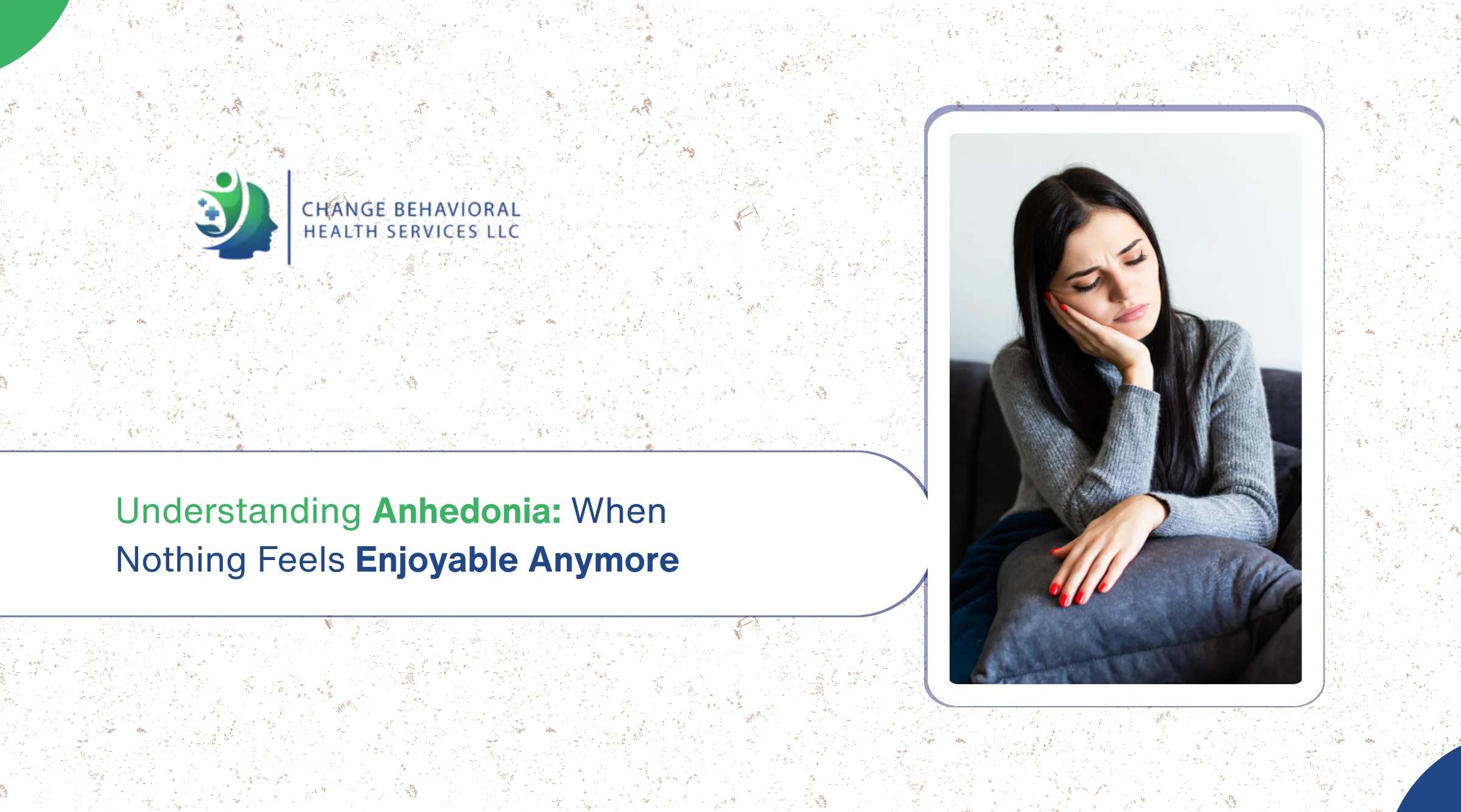
You used to look forward to certain things. A favorite meal, time with friends, a pastime, music, even a walk. Now those very same events seem dull. You may go through the motions, but the fun is missing or subdued. This isn’t just ordinary boredom or a passing poor mood. It is often a symptom called anhedonia.
Anhedonia is a reduced capacity to experience pleasure or interest in previously pleasurable things. It is a basic aspect of depression and can also be seen in other mental health problems. Knowing what it is, how it presents, and what can help is a vital step to feel more like yourself again.
What Anhedonia Actually Feels Like
Anhedonia is more than just not feeling happy. Many people describe it as a sense of emptiness or emotional flatness. Things that used to be exciting or satisfying are no longer. You can still go to work and go to social events, but the reward inside is gone.
What you might experience is:
- Loss of interest in things or activities that once were important
- Little pleasure in food, music, physical contact, or other sensory pleasures
- Reduced interest in social interaction, even with those you love
- Trouble looking forward to future events
- The feeling that the good times seem subdued or distant
Some people notice it more when they are out with people. Others sense it more in physical or sensual pleasures. Many have both. Importantly, anhedonia is not the same as not enjoying something, or choosing to be alone. The ability to enjoy seems itself weakened.
Why Anhedonia Happens
Anhedonia is directly related to the brain’s reward system. This mechanism permits us to predict pleasure, experience it in the moment, and learn from pleasant events. When this system is disrupted, the drive to seek pleasurable activities and the ability to experience satisfaction from them diminish.
It is seen most frequently in depression, where it is considered one of the two main symptoms, along with poor mood. It is also present in bipolar disorder (particularly depressive episodes), anxiety disorders, post-traumatic stress, substance use disorders, and some other medical or neurological diseases.
Stress, trauma, persistent life challenges, and changes in brain chemistry can all be contributing factors. Anhedonia isn’t a personal fault or a lack of effort. It is a recognizable symptom that responds to adequate treatment.
How Anhedonia Differs from Everyday Low Mood or Boredom
Everyone gets bored with something at some point. Interests naturally change, and temporary stress can make things feel less enticing. Anhedonia is not the same in extent or in duration. It often affects many or most aspects of life that formerly offered joy, lasts for weeks or more, and is not readily explained by a specific change in circumstances.
It is also separate from apathy, which is primarily about a lack of motivation or energy to act. Anhedonia is a specific problem with the ability to experience pleasure or interest, even when the activity is present.
Knowing the difference allows people to seek the correct type of support instead of feeling that they need to “try harder” to get pleasure out of things.
The Impact on Daily Life
Without joy and interest, daily living can feel like a bigger burden. People may pull away from relationships, give up a hobby, or struggle to sustain rituals that used to feel meaningful. This may result in more isolation and a bad mood, which can be hard to break without support.
Anhedonia can also make it more difficult to engage completely in treatment or other useful activities since the usual internal rewards that drive motivation are diminished. So, facing it head-on is a huge part of getting better for a lot of people.
What Can Help
Anhedonia is treatable, especially if the underlying disease is treated. Common approaches include:
- Behavioral activation: Getting back into activities gradually even if you don’t feel motivated, which can assist in jump-starting the reward system over time
- Talk therapy: Cognitive behavioral therapy approaches that target patterns of thinking and behavior associated with poor mood and loss of interest
- Medication management: When appropriate, medication can assist the brain systems that regulate mood and reward
- Lifestyle supports: Good sleep, exercise, and organized daily routines may foster an environment where improvement is more likely
Progress is often gradual. Little steps are better than waiting for motivation or fun to come back in full force before you act. Seeing a clinician who understands anhedonia as a specific symptom (rather than low mood generally) can help make treatment more targeted.
Practical Tips While Seeking Support
- Observe and gently follow when involvement or pleasure is reduced. This information is helpful for assessment.
- Begin with simple, low-pressure activities instead of waiting until you “feel like it.”
- Spend time with individuals who are supportive of you, even if socializing feels flat right now.
- Have patience with yourself. Anhedonia is a symptom, not a reflection on who you are or how much work you’re putting in.
- If the loss of enjoyment is ongoing and interfering with your life, get a professional evaluation.
Support Available Through Change Behavioral Health Services
At Change Behavioral Health Services, we understand that symptoms like anhedonia can be puzzling and isolating. We offer psychiatric assessment and medication management, psychoeducation, and counselling to adults suffering from depression, anxiety, and related problems.
Care is provided via telehealth and at certain locations throughout the Washington, D.C., Maryland, and Virginia area. The approach is person-centered. It’s looking at the whole picture of symptoms, including loss of interest and pleasure, to build treatment strategies that support meaningful improvement.
Moving Toward Reclaiming Interest and Enjoyment
Anhedonia is a real and recognizable experience. When the capacity to feel pleasure fades, life can feel muted and effortful. The good news is this symptom is understood and can get better with the right treatment.
If nothing seems fun anymore and the shift lasts for more than a short period of time, a professional review can help clarify what is happening and what choices may help. You don’t have to face this alone. There is hope, and many people do begin to find joy and interest again.
FAQs
Is anhedonia the same as depression?
No. Anhedonia is a symptom. Depression is a broader condition that often includes anhedonia along with other symptoms such as low mood, changes in sleep or energy, and difficulty concentrating.
Can anhedonia occur without feeling sad?
Yes. Some people experience significant loss of interest or pleasure even when persistent sadness is not their main complaint. This is still clinically important and worth evaluating.
Will anhedonia go away on its own?
Mild or temporary reductions in interest can improve with rest or changes in circumstances. Persistent anhedonia that lasts weeks and affects daily life usually benefits from professional support focused on the underlying factors.
How is anhedonia treated?
Treatment typically addresses the condition linked to the symptom. This may include therapy approaches that encourage gradual re-engagement with activities, medication management when appropriate, and practical supports for sleep, routine, and stress.
Should I force myself to do activities I no longer enjoy?
Gentle, structured re-engagement (sometimes called behavioral activation) can be helpful, but it works best with guidance and realistic expectations. Forcing large or demanding activities when the capacity for pleasure is low can feel discouraging. Small, consistent steps are usually more sustainable.