
Most people who relapse can point to things that were already shifting two or three weeks before it happened. Not one big moment. A bunch of small ones they explained away. The warning signs were there. They just weren’t being called warning signs at the time.
The 10 Signs
1. Dropping Out of Therapy or Meetings
One missed session is not the issue. A string of them, with reasons that keep changing, is a different pattern. Recovery structures tend to fall away before anything else does.
2. Remembering the Good Parts and Not the Rest
When the brain starts replaying what felt good and quietly dropping what came after, that selective memory has a function. It is making the option look better than the full picture warrants.
3. Pulling Away From People
Avoiding family, friends, a sponsor, anyone who might notice something is off. This gets framed as needing space. Sometimes it is. But extended withdrawal from the people who know you well, during recovery, is worth looking at honestly.
4. Stress With No Way Out
Stress accumulates. Without something to discharge it into, therapy, movement, connection, rest, it builds into a pressure that historically has gone somewhere. That somewhere is the concern.
5. Sleep and Appetite Going Off
Not sleeping. Sleeping too much. Not eating. Eating differently. The body registers what the mind has not yet named. These physical shifts often show up before anything conscious does.
6. Mood That Has Shifted and Stayed Shifted
Irritability that has been there for a week and a half. Flatness. Depression coming back. Anxietyspiking without a clear reason. Any significant change in emotional baseline that is not tied to a specific event and has not passed.
7. Getting Back in Contact With Old People or Places
An old contact who reaches out. Driving a familiar route. Telling yourself it’s fine because recovery is solid now. The association is the risk, regardless of where things currently stand.
8. Thinking About a One-Time Exception
The thought that once wouldn’t undo everything. That this situation is different. That controlled use is possible this time. These are specific, recognizable thoughts. Say them out loud to someone.
9. Stopping Medication Without Telling Anyone
For people managing mental health conditions alongside recovery, going off prescribed medication without a provider’s input destabilizes things fast. Unmanaged symptoms make everything harder to hold.
10. Working Hard to Convince Yourself You’re Fine
Not the feeling of doing well. The effort to maintain that it’s all under control when something underneath says otherwise. Recovery overconfidence has its own risk profile.
Building a Safety Plan
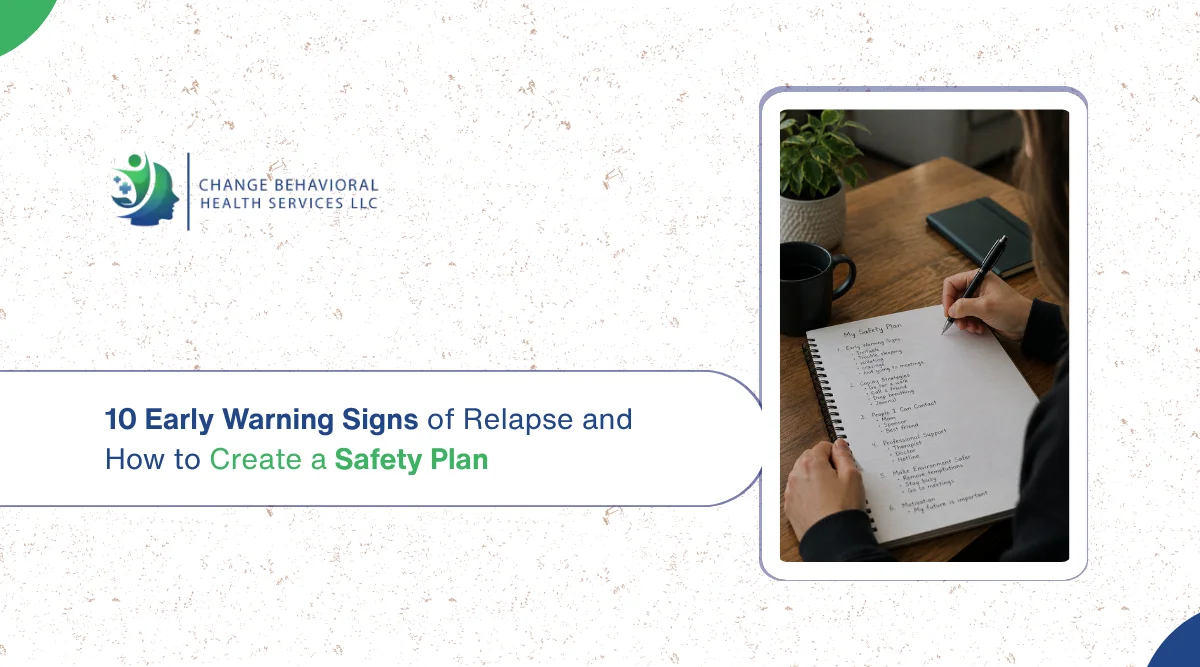
A safety plan gets made during a stable period, not during a bad one. You’re writing down decisions in advance, when thinking is clear, so there’s something to reach for when it’s not.
Write Down Your Specific Signs
Not the generic list above. Yours. What showed up first last time? What did you rationalize? What did people around you notice before you did? Write those down specifically.
Name Your Triggers
Particular people. Situations. Levels of stress. Specific emotions. Certain times of year. Vague triggers are harder to plan around. Concrete ones are not.
List Who You Call and in What Order
Therapist, sponsor, family member, crisis line. Names and numbers in the document, not just in your head. Include a backup for when the first person is unavailable.
Decide the First Action
When a warning sign shows up, what happens first? A specific text to a specific person, leaving a specific situation, going somewhere specific. ‘Reach out for support’ is not a plan. A name and a first step is.
Include a Crisis Step
If things move past warning signs into something acute, who gets called and where do you go? If thoughts of self-harm are part of the picture, put the 988 Suicide and Crisis Lifeline (call or text 988) in the plan and a provider’s direct contact.
Go Over It With Someone Else
A plan that only you have seen is less useful. A therapist or sponsor who knows what your signs look like and what they’re being asked to do when they see them changes what the plan can actually catch.
Change Behavioral Health Services
If warning signs are already showing up, or you want to build a safety plan with clinical support behind it, Change Behavioral Health Services works with adults managing recovery, depression, anxiety, and co-occurring conditions through counseling, psychiatric evaluation, and medication management.
Services are available by telehealth across Washington DC, Maryland, and Virginia, with in-person options for clients in residential and care settings.
Phone: (301) 732-7721
Email: changebhservices@gmail.com
Location: 18310 Montgomery Village Avenue, Suite 300 #1107, Gaithersburg, MD 20879
Hours: Monday to Friday, 9 AM to 5 PM
We are here for you.
1 Comment
ADHD and Addiction: Understanding the Connection
[…] boredom, identifying impulsive decisions, and finding more effective ways to cope with stress.Relapse prevention strategies should be customized to the person’s unique triggers and obstacles, rather than a […]