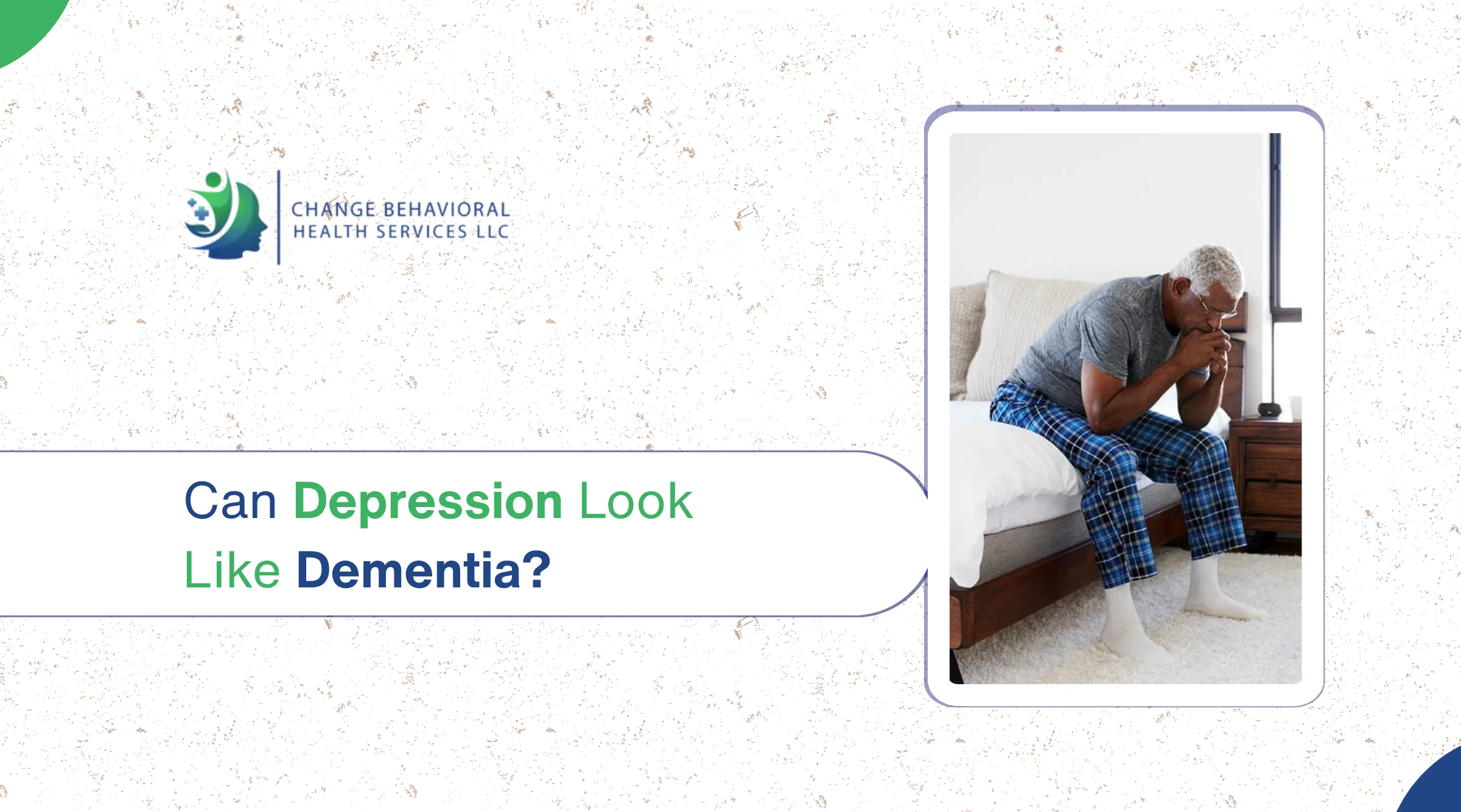
Memory lapses. Difficulty focusing. Thoughts slowed. Difficulty making decisions or doing ordinary things. Such changes can be worrying, particularly in the elderly, and typically raise the question of dementia. Yet in many situations the underlying cause is not increasing brain illness. It is depression.
Depression can cause cognitive symptoms that are very much like dementia. This syndrome has been recognized clinically for a long time and is sometimes called “depressive pseudodementia” or “depression-related cognitive impairment”. This is a very important distinction since depression is treatable, and the cognitive problems associated with it frequently improve when the mood disorder is treated.
How Depression Can Mimic Dementia
Depression is more than mood. It can slow thinking, diminish motivation, decrease focus, and interfere with memory recall. In the worst cases, these changes are so obvious that family members and sometimes the person themselves become concerned about dementia.
Commonly overlapping symptoms include:
- Memory problems or difficulties remembering recent information
- Trouble concentrating or following discussions
- Slowed brain processing
- Poor planning and organizational skills
- Withdrawal from contact with others and activities
- Alterations in sleep, appetite or energy levels
These cognitive impacts may be particularly pronounced in older persons. Depression-related mental weariness and low motivation can mimic the steady decline found in illnesses such as Alzheimer’s disease. The individual may seem not to care, struggle with routine activities, or give up easily on questions during a cognitive exam.
Crucially, these cognitive deficits are not due to the same type of gradual loss of brain cells that characterizes most types of dementia. They are secondary to the psychiatric disease and frequently improve with appropriate treatment of depression.
Key Differences Between Depression-Related Cognitive Changes and Dementia
Some patterns assist in differentiating the two, although symptoms overlap. These differences are not absolute; every person is unique, and the illnesses can sometimes coexist, but they offer useful clinical hints.
Onset and progression
Cognitive symptoms of depression tend to occur more acutely, across weeks or months, and may be associated with a specific life stressor or change in mood. Dementia develops slowly, over a period of several years.
Awareness of the problem
Many people with depression are aware of problems with their memory or thinking and are worried about them. They could be upset or distressed by the changes. Conversely, individuals with dementia are more prone to minimize their deficits or seem ignorant of their deficits.
Effort and response style on testing
In cognitive tests, a person who is depressed may say “I don’t know” or rapidly give up if a task seems difficult. The individual with dementia is usually trying hard yet gives wrong or near-miss answers.
Pattern of memory difficulties
Depression is more likely to interfere with the ability to recover knowledge that has been stored. Clues or prompts can facilitate recall. Early dementia usually affects the ability to encode new information in the first place; thus, there may not be a memory to aid with.
Mood and other symptoms
If you see clear indicators of poor mood, loss of interest, guilt, or thoughts of worthlessness, then you are showing signs of depression. Dementia-related alterations are more likely to include apathy, emotional blunting, or variable but not largely mood-based confusion.
Orientation and daily skills
People with cognitive impairment from depression are normally oriented in time and location and have basic language and movement skills. Greater concern about dementia tends to arise from significant disorientation or loss of once automatic skills.
These distinctions offer a guide to appraisal, but are no substitute for expert evaluation. A complete workup is necessary.
Why Accurate Diagnosis Matters
Confusing curable depression with permanent dementia can delay intervention that may improve cognition and quality of life. But neglecting early dementia and relying solely on mood can hold up critical planning and support.
Depression and dementia interact as well. Depression may be a risk factor for later cognitive impairment in some persons, and dementia itself is often associated with depressed symptoms. Sometimes what looks like pure depression turns out to be an early symptom of a neurodegenerative process. The picture becomes clearer through careful and frequent assessments over time.
Cognitive symptoms associated with depression are generally reversible or responsive to treatment, indicating that treating the mood illness can lead to a substantial recovery of thinking, memory, motivation, and everyday activities.
What a Proper Evaluation Involves
A complete evaluation often includes:
- A thorough history of onset and progression of symptoms, related mood disturbance, or life events
- A review of medical issues, medications, sleep, substance use, and other factors that may impair cognition is performed
- Screening of depression and other psychiatric symptoms
- Testing of cognition such as memory, attention, language, and executive functions
- Sometimes laboratory testing or brain imaging is done to rule out other medical causes
- Collateral information from relatives or close contacts if available
The aim is to get the whole picture, not just one symptom. Depression is generally treated when it is a plausible factor. Mood and cognitive symptoms are monitored carefully over time.
Treatment Approaches When Depression Is the Driver
If the cognitive problems are mostly due to depression, the first step is to treat the mood condition. Approaches may include:
- Evidence-based psychotherapies (e.g., cognitive behavioral therapy, behavioral activation), as tailored for older persons as needed.
- Antidepressant medicine appropriately chosen and monitored.
- Treatment of any contributory variables such as sleep issues, medical illnesses, isolation, or drug adverse effects.
- Supportive lifestyle measures include frequent activity, social connection, and planned daily routines.
Mood improves, and along with it, often concentration, mental energy, and memory retrieval. Progress is tracked so that any residual cognitive issues can be reviewed.
Practical Tips for Individuals and Families
- Take cognitive changes seriously, but don’t jump to conclusions. There is treatment for several factors that may affect thinking.
- Note the timeline: Have the changes been really rapid in terms of mood swings, or have they been rather slow?
- See conscious effort: Is the person concerned about their memory, or are they pretty much ignoring it?
- Don’t self-diagnose, or use internet checklists. Request a comprehensive medical and mental health assessment.
- Support treatment if depression is detected and allow cognitive symptoms time to respond.
- As a family member, continue to be involved, providing calm and consistent support and correct observations to the care personnel.
- Manage isolation, inactivity, and poor sleep, which can impact mood and thinking.
Support Available Through Change Behavioral Health Services
Change Behavioral Health Services LLC offers person-centered care to adults with mental health needs, including depression and cognitive impairments. We offer psychiatric examinations, medication management, and psychoeducation and counselling. Care is available via telehealth and at locations in the Washington, D.C., Maryland, and Virginia area.
A careful assessment may clarify whether the impairments in thinking and memory are due to depression or to another treatment-related reason or process. Early, accurate assessment provides the gateway to the right help and the maximum likelihood of improvement.
Moving Forward with Clarity and Hope
Depression can appear like dementia, and the resemblance is real enough to be worrying. The important difference is that depression-related cognitive impairment often responds to treatment. For many, diagnosis and treatment of the mood illness can return clearer thinking, more energy, and better function on a day-to-day basis.
If you or someone you love has problems with memory, trouble concentrating or slow thinking, and changes in mood or motivation, a professional evaluation is a good next step. Reach out to us today. Clarity opens up options, and effective care is available.
FAQs
Is pseudodementia a real diagnosis?
Clinicians use the term “pseudodementia” to refer to cognitive deficits that resemble dementia but are actually the result of a psychiatric illness, most often depression. The phenomenon itself is well known and clinically relevant, although it is not a formal, stand-alone diagnosis in current classification systems.
Can depression and dementia occur together?
Yep. Often both difficulties occur together. In some individuals, depression may be a risk factor for subsequent cognitive decline. Dementia is typically associated with secondary depressive symptoms. Evaluation clarifies their relative contributions.
Will treating depression always reverse the cognitive symptoms?
Many people find that when depression is well treated, they have significant increases in concentration, recall, and mental speed. Some cases have ongoing cognitive difficulties that require further examination. Continuous surveillance is important.
Is this only a concern for older adults?
While the link between depression and dementia-like symptoms is often stressed when considering elderly patients, depression can impair cognition at any age. Young adults with severe depression may also have serious problems with concentration and memory, and these improve with treatment.