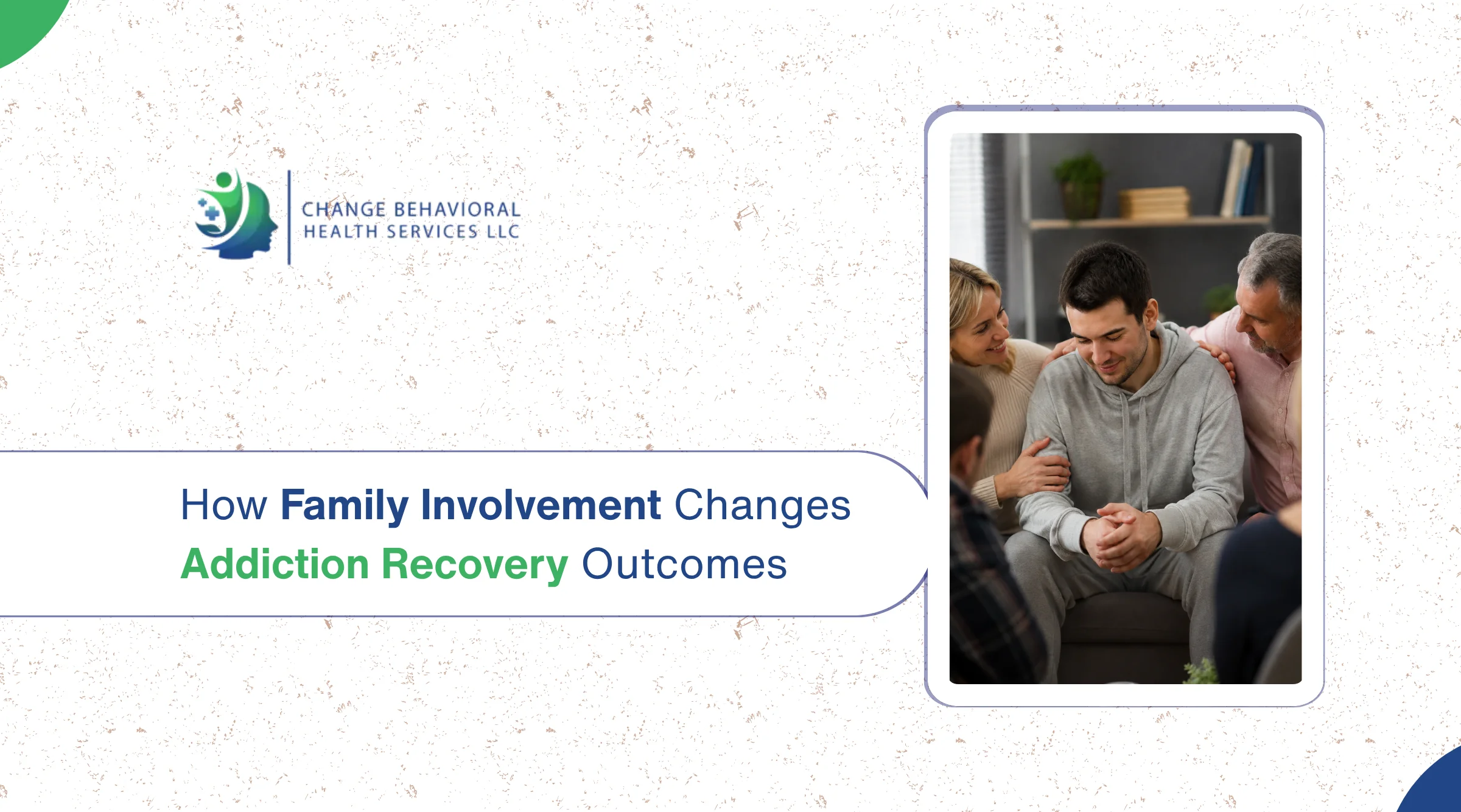
For a long time, addiction treatmentcentered almost entirely on the person using. One patient, one plan, and family kept mostly on the sidelines, maybe invited in for a single meeting near discharge. That’s shifted a lot over the past couple decades, and the data behind the shift is fairly convincing.
What the data says.
SAMHSA has pulled together decades of research on this, and the pattern is consistent: when family gets involved in treatment, people are more likely to enter treatment in the first place, more likely to stay once they’re there, and tend to do better after they leave. This shows up across different substances, different levels of care, and different age groups, which is part of why it’s taken seriously as more than a nice-to-have.
And yet family-based treatment is still fairly rare in practice. Some of that comes down to clinicians assuming families are part of the problem rather than part of the solution, and some of it is just a lack of training in how to bring families into care without it backfiring.
Why it actually works.
A lot of it comes down to what happens at home once the formal treatment hours are over.
Families tend to develop habits around addiction without meaning to, covering for missed shifts, smoothing over consequences, paying off debts quietly so things don’t get worse. None of this comes from a bad place. It comes from love, mostly, and fear. But it can end up softening the very consequences that might otherwise push someone toward change, and family therapy is often where this gets named for the first time, without turning it into blame.
Communication tends to be another piece of it. Years of addiction usually wear down how a family actually talks to each other, replacing honest conversation with avoidance, walking on eggshells, or blowups that don’t resolve anything. Structured sessions give people a chance to rebuild that, sometimes for the first time in a long while.
There’s also just the practical matter of the first few months after treatment being the highest-risk stretch for relapse. A family that knows what to watch for, and knows how to respond without panicking or overreacting, changes what that window looks like.
CRAFT and family systems approaches.
Community Reinforcement and Family Training, usually shortened to CRAFT, is probably the most rigorously studied family-based method in this field. Robert Meyers developed it specifically to train family members in communication skills and ways to reinforce healthy behavior, without relying on ultimatums or confrontation, which tend to push people further away rather than closer to treatment.
Family systems theory takes a somewhat different angle, treating addiction as something that reshapes the whole household rather than something contained to one person. Murray Bowen laid the groundwork for this decades ago, and clinicians like Claudia Black built on it since, pointing out that roles inside a family often shift around addictionin ways nobody consciously chooses, and treatment that ignores that tends to leave part of the picture untouched.
It’s not the same for every family.
Not every household should be involved the same way, or to the same degree.
A family with a relatively stable, low-conflict relationship to the person in treatment usually does well with structured therapy sessions early on. A family with a history of abuse, ongoing conflict, or its own untreated substance use needs a much more careful approach, sometimes starting with separate support rather than joint sessions until there’s more stability.
Adolescents tend to have family involved by default, since a teenager is still living inside a household that shapes daily life whether anyone plans for that or not. With adults, it’s more of a judgment call, based on the specific people and relationships involved.
How this looks in practice at Change Behavioral Health Services.
Family work here usually includes education for family members on what addiction and recovery actually look like, structured family therapy sessions, and practical guidance on communication that doesn’t rely on ultimatums. Family members also get support for themselves, since caregiver stress in this position is real and tends to get overlooked.
None of this puts recovery on the family’s shoulders. It’s more about clearing out obstacles that often exist without anyone realizing it, and building a home environment that actually backs up the work happening in treatment instead of quietly working against it.
If addiction has touched your family.
Especially when the treatment itself is about an individual, recovery is seldom a solitary process.
Reach out to Change Behavioral Health Services to learn more about family-inclusive treatment options.