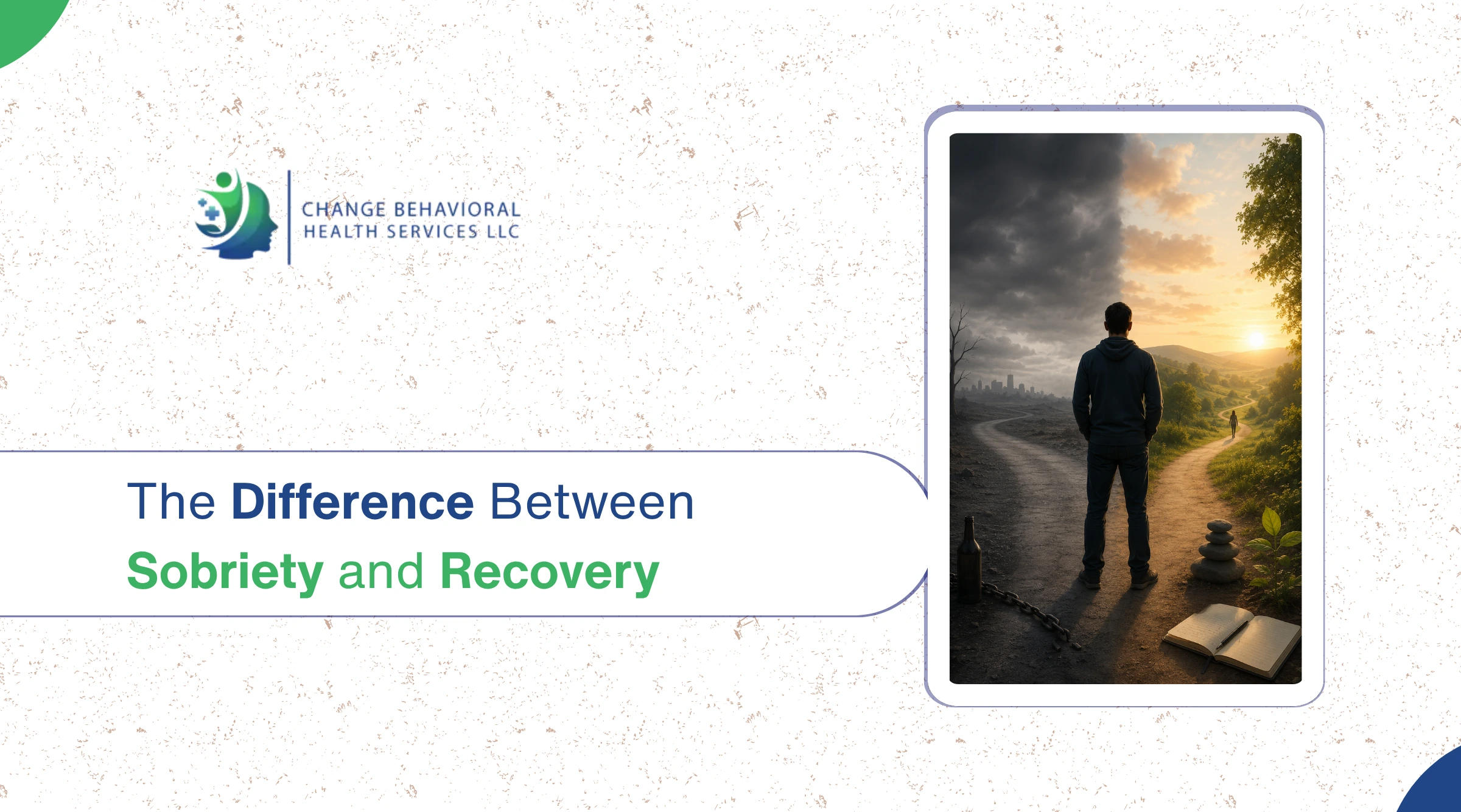
Sobriety is not using. That’s the whole definition. You put the substance down and you stay stopped. By that measure, a person who quit drinking because their doctor scared them into it and resents every sober day is doing the same thing as someone who has rebuilt their entire life. The number is the same. The experience is not.
Recoveryis a lot different, and harder to put a definition to, and there are all sorts of arguments and disagreements about what the boundaries are and what it means. But most people who have been through sobriety and recovery usually know this difference as well, even if they cannot put it to words.
What Sobriety Is Without Recovery
There’s a term some people in twelve-step programs use: dry drunk. This means that someone has become sober, but has not changed their lifestyle. The irritability, the shame, and other avoidance and dishonesty patterns that go with the substance are still there. The substance is gone, but the person is still the same.
This is not about being judgmental. Getting sober is a challenge and a big accomplishment. The act of getting sober is not enough to deal with the causes of the substance problem. Getting sober doesn’t deal with the anxiety, the trauma, the relationships, the self-image, the coping strategies that have developed over the years, and the many other things. Getting sober just removes one big obvious problem.
Many people have trouble explaining why they are so unhappy after getting sober. This is because they did what they were told to do. They do not use or drink, but they feel terrible. That gap between doing the right thing and feeling any better is one of the main reasons people relapse. Not because they’re weak. Because sobriety without any of the other work is a very uncomfortable place to live.
What Recovery Actually Involves
Recovery is usually described as a process rather than a destination, and that’s accurate, but it can also sound vague enough to mean nothing. More concretely, recovery involves working on the things that sobriety doesn’t automatically fix.
That tends to include:
- Understanding what role the substance was playing, what it was managing or avoiding or providing, and finding something else to put in that place
- Addressing underlying mental health conditions that were there before the substance use or developed alongside it, depression, anxiety, PTSD, ADHD, all of which have high co-occurrence with addiction
- Rebuilding or developing coping skills that don’t involve substances, which is harder than it sounds for someone who has used substances as their primary emotional regulation tool for years
- Repairing relationships where that’s possible, and learning to have relationships differently
- Developing some kind of honest relationship with themselves, which often means sitting with shame and self-perception that the substance was helping to avoid
None of this happens on a fixed timeline. Some of it takes years. Some of it requires professional support. Most of it is uncomfortable in ways that are different from but comparable to the discomfort of early sobriety.
Why the Distinction Matters Clinically
In addiction medicine and behavioral health, the difference between sobriety and recovery isn’t just philosophical. It has real implications for relapse risk and treatment planning.
Someone who is sober but not in any kind of recovery process, no therapy, no support, no work on underlying issues, is at significantly higher relapse risk than someone engaged in recovery. Not because they’re less committed, but because sobriety without support is structurally fragile. There’s nothing catching the person when the difficult moments arrive, and difficult moments always arrive.
Co-occurring mental health conditions are a major factor here. Research consistently shows that untreated depression, anxiety, trauma, and ADHD dramatically increase relapse rates. Addressing only the substance use while leaving those conditions untreated is like patching one hole while the rest remain open. The water keeps coming in.
Recovery Doesn’t Require a Specific Path
Twelve-step programs work for a lot of people. They don’t work for everyone. Recovery doesn’t have a mandatory route. What it does tend to require is some combination of community, honest self-examination, professional support when needed, and consistent work over time.
Some people do most of their recovery work in therapy. Some in peer support groups. Some through a combination of medication-assisted treatment and behavioral support. Some through faith communities. The form matters less than whether the actual work of addressing underlying issues is happening.
When Sobriety Turns Into Recovery
For most people there isn’t a clean moment where one becomes the other. It’s more like a gradual shift, at some point the person realizes they’re not just not using anymore, they’re actually living differently. Things that used to be unbearable are manageable. Relationships feel more real. The shame has loosened enough to let other things in.
That shift doesn’t happen on a schedule. For some people it starts early. For others it takes years of being sober before they get serious about the rest of it. For some it never fully happens, and they stay sober but uncomfortable for a very long time.
What tends to accelerate it is support. Specifically, professional support that takes the whole person seriously, not just the substance use.
Change Behavioral Health Services
At Change Behavioral Health Services, substance use doesn’t get treated in isolation from everything else going on. Psychiatric evaluation, medication management, and counseling are available for adults dealing with addiction alongside depression, anxiety, trauma, and other co-occurring conditions. The work here addresses what’s underneath, not just what’s visible.
Services are available by telehealth across Washington DC, Maryland, and Virginia, with in-person options for clients in residential and care settings.
If sobriety hasn’t felt like enough, that’s probably because it isn’t. Recovery is the rest of it.
Phone: (301) 732-7721
Email: changebhservices@gmail.com